university of massachusetts
vision plan
dartmouth, massachusetts
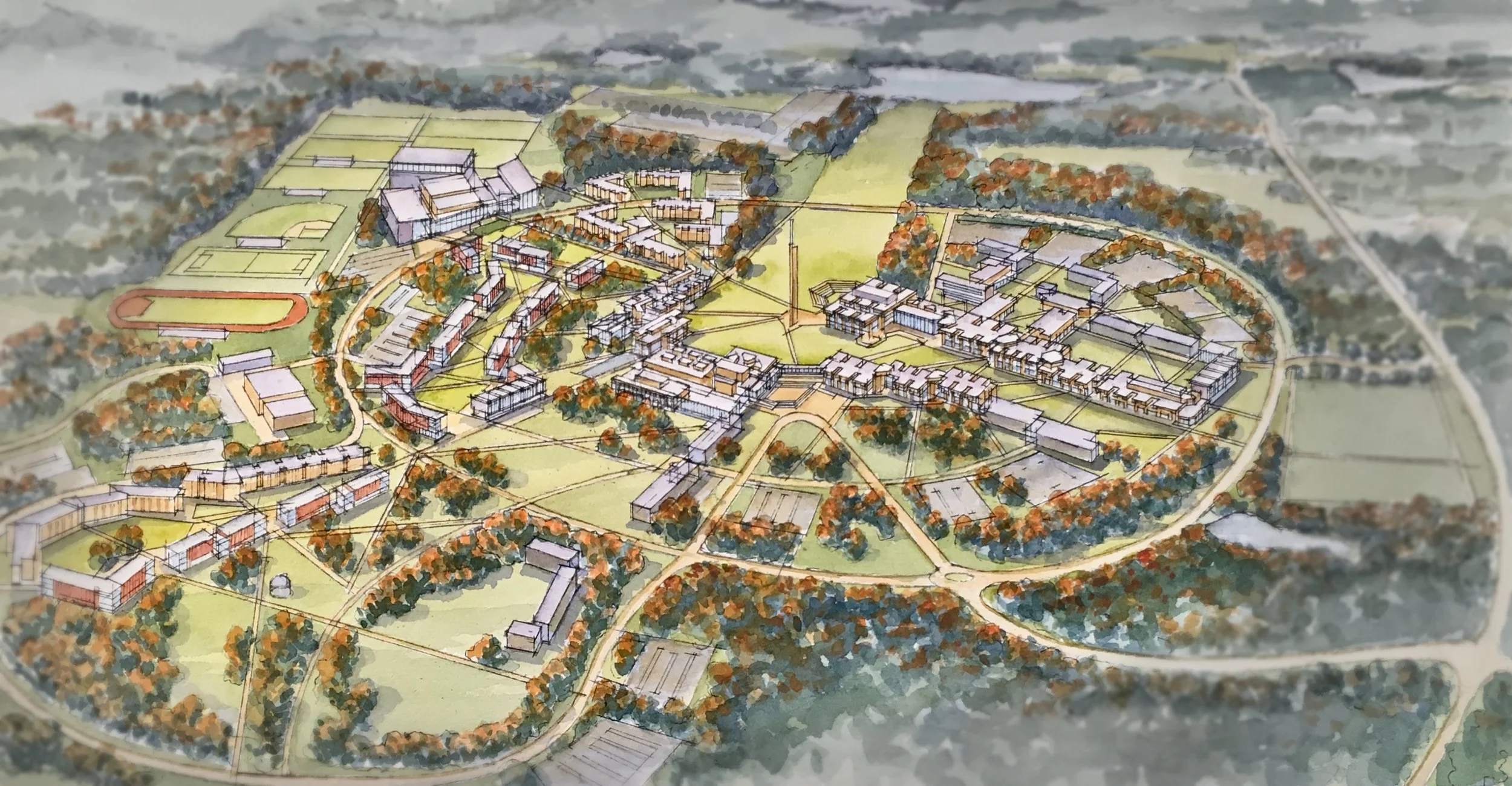
In 2017, designLAB completed a Campus Vision Planning effort for the University of Massachusetts Dartmouth, designing a road map for the renovation and replacement of facilities and grounds to enhance teaching and learning, research, and student development. This Campus Vision Plan sought to address four key issues affecting the function, perception, and condition of the campus: deferred maintenance, research and student life capacity; visitor and prospective student experience; and circulation/transportation issues. The plan is guided by a set of principles, including the need to enhance academic facilities to meet 21st century needs and aspirations, reinforce a sense of campus community and engagement, connect different sections of the campus with each other, improve first impressions of the campus, and honor Paul Rudolph’s legacy.
The Campus Vision Plan process commenced with a qualitative and quantitative analysis of the existing UMass Dartmouth campus. The design team examined prior campus studies, toured the campus, assessed the facilities and infrastructure, studied campus circulation systems, quantified space usage, and met with numerous focus groups representing faculty, students, and leadership. The Vision Plan presented the initial findings from the information gathering stage and solicited feedback from constituents in order to establish the guiding principles and refine the scheme to address key issues facing the campus and accommodate future needs.
-
Type: Master Plan
Status: Completed, 2017
enhancing academic facilities
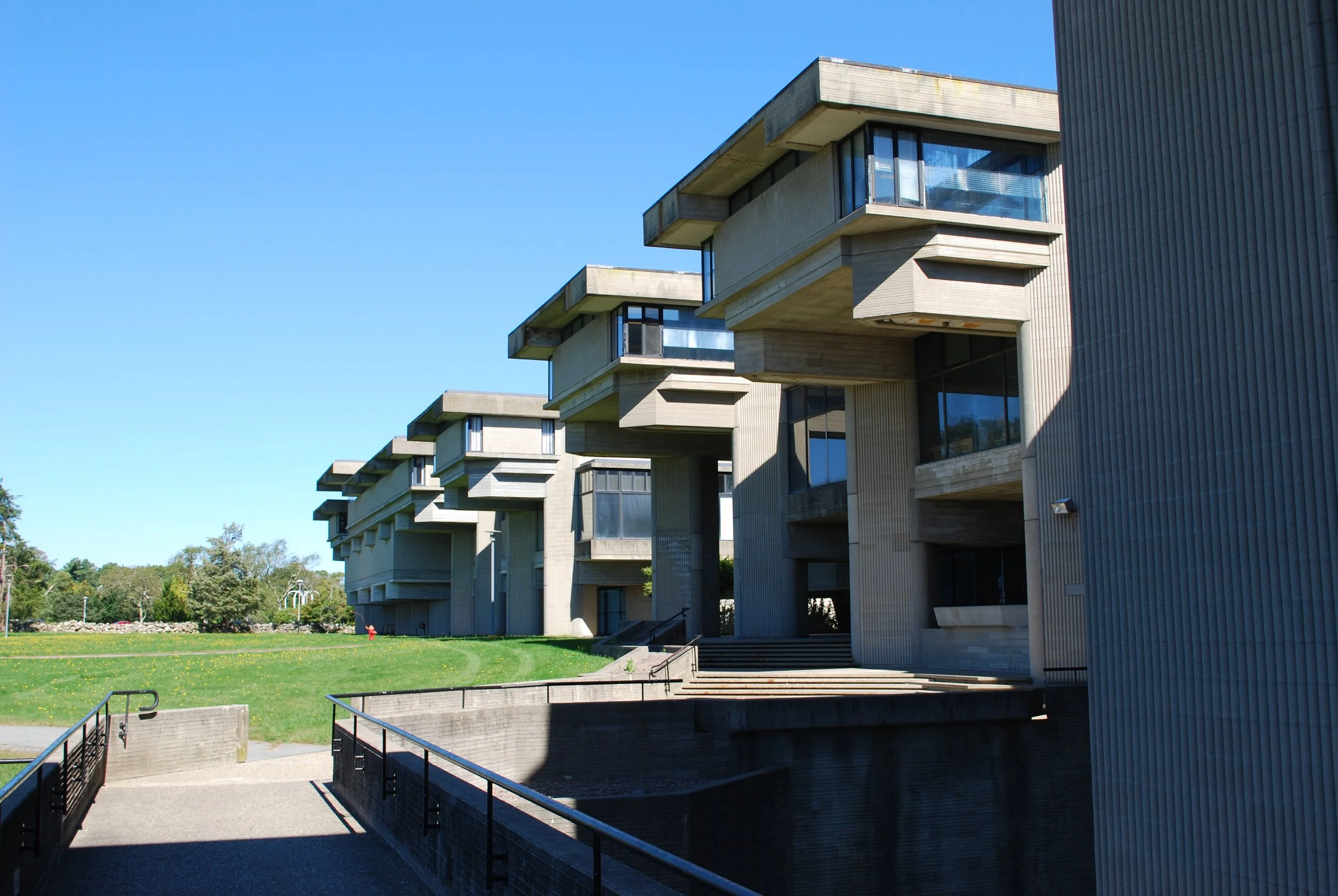
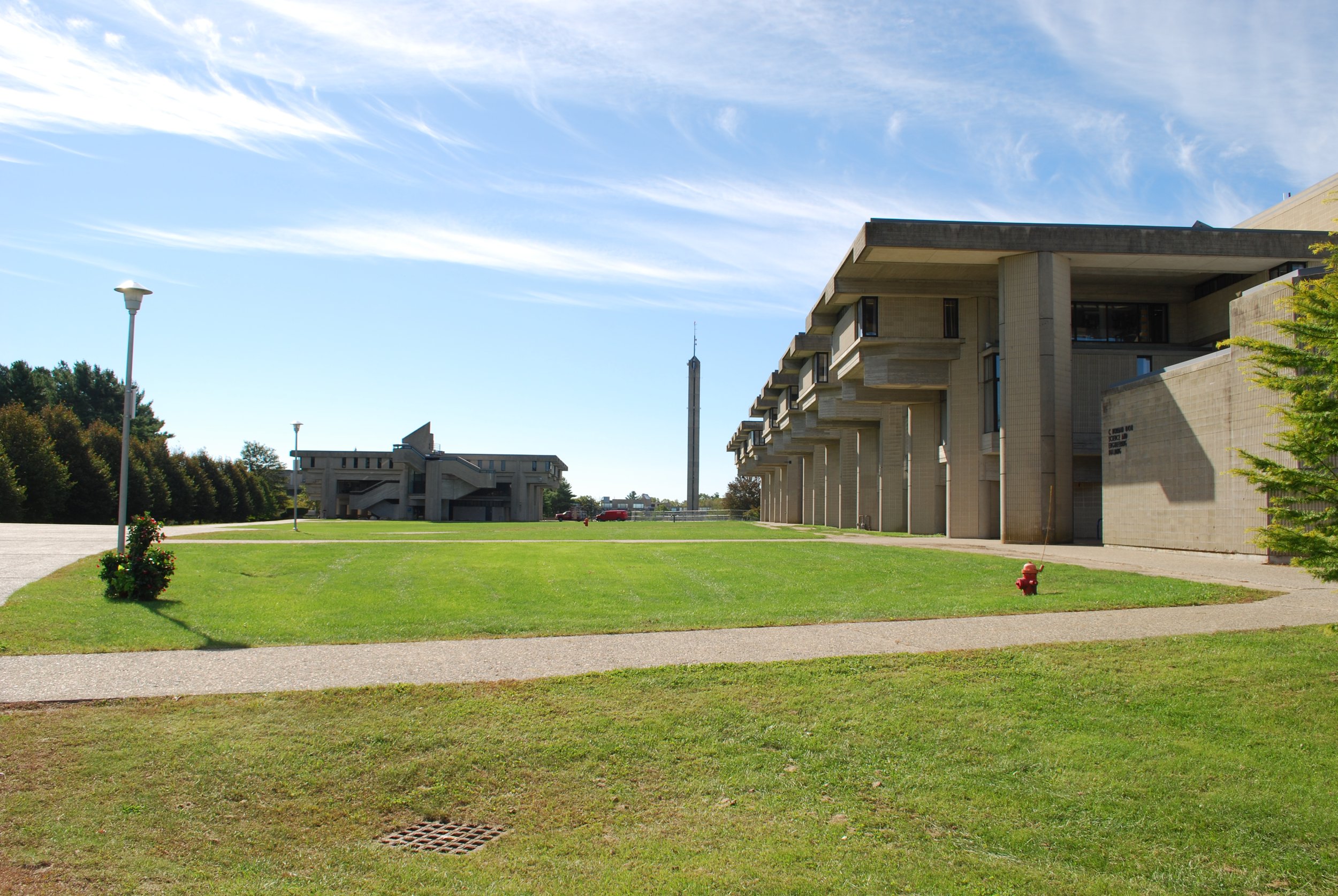
Relocating the ground floor envelope to align with the second floor above would allow for interior classroom partitions with flexibility to relocate and widen the academic corridors to accommodate additional student space, while maintaining the existing classroom proportions of 25-30 students per classroom. This change also increases natural light for ground floor classrooms, creates a more active presence on the Great Lawn, and facilitates a new accessible path with views of the Campanile.
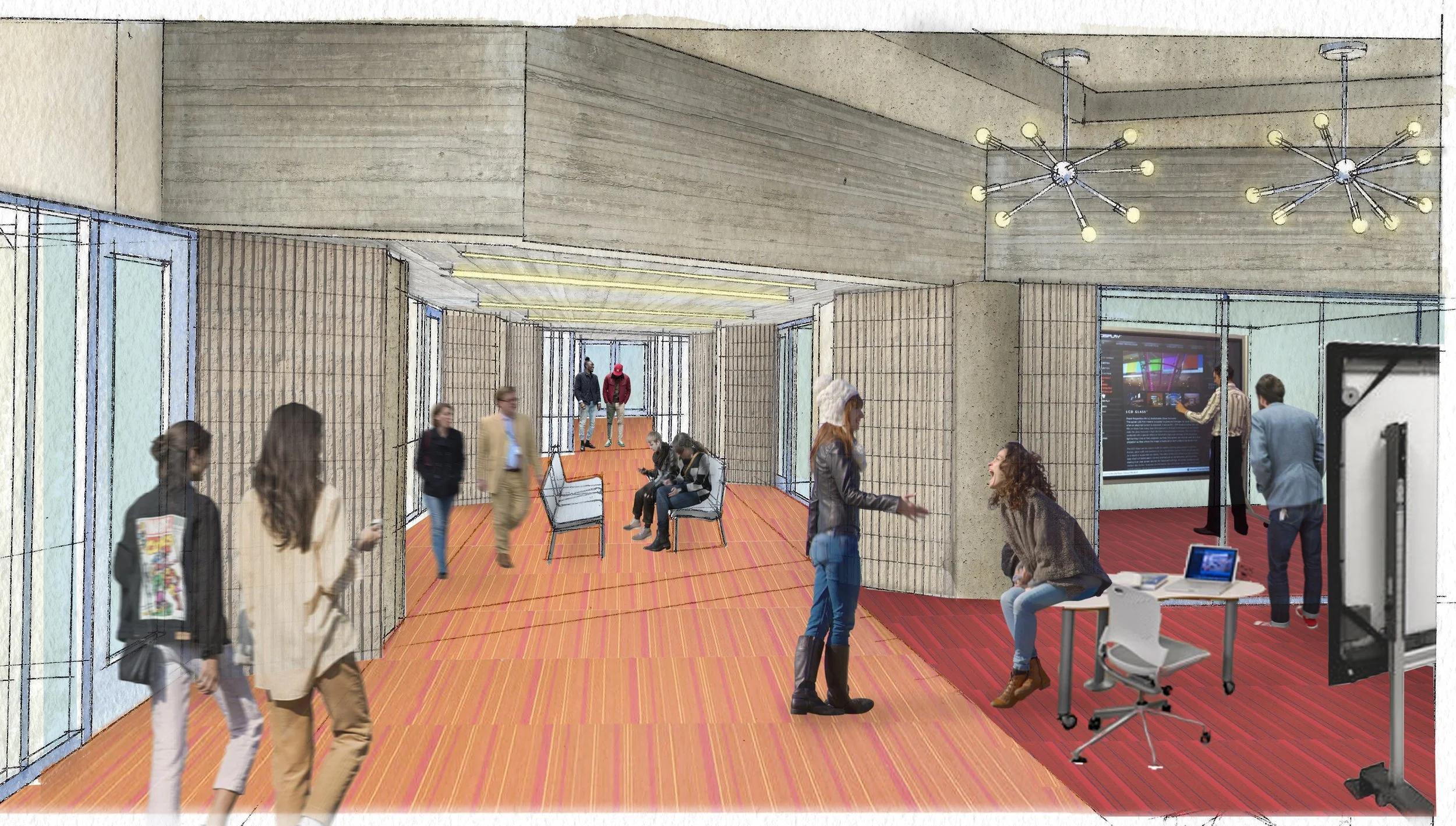
The existing academic corridors also presented opportunities for improvement from both an experiential and programmatic standpoint. The Campus Master Plan proposes replacing the non-load bearing corridor walls with glass partitions. These partitions would increase the natural light entering the building, and could also be relocated to optimize classroom size.
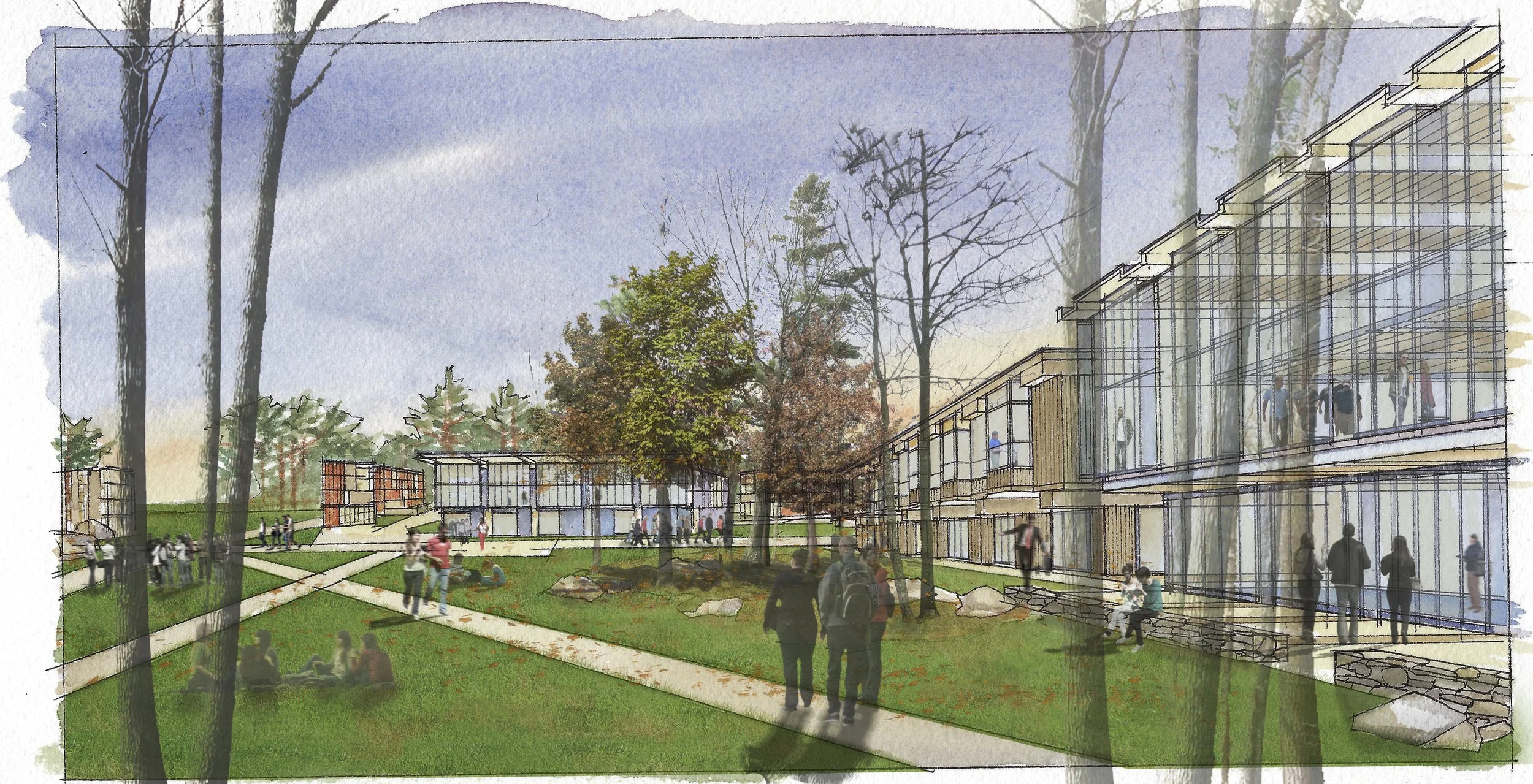
The new STEM education building is proposed to anchor the north end of a new sciences quad. Future development will define this outdoor area further, creating a new semi-public open academic space for students to utilize, and link the atriums along with the campus pedestrian loop.
The updated Campus Vision Plan emphasizes both future expansion, including a new STEM education building anchoring a new sciences quad, and the renovation of existing space, particularly the Rudolph buildings, to meet UMass Dartmouth’s goals.
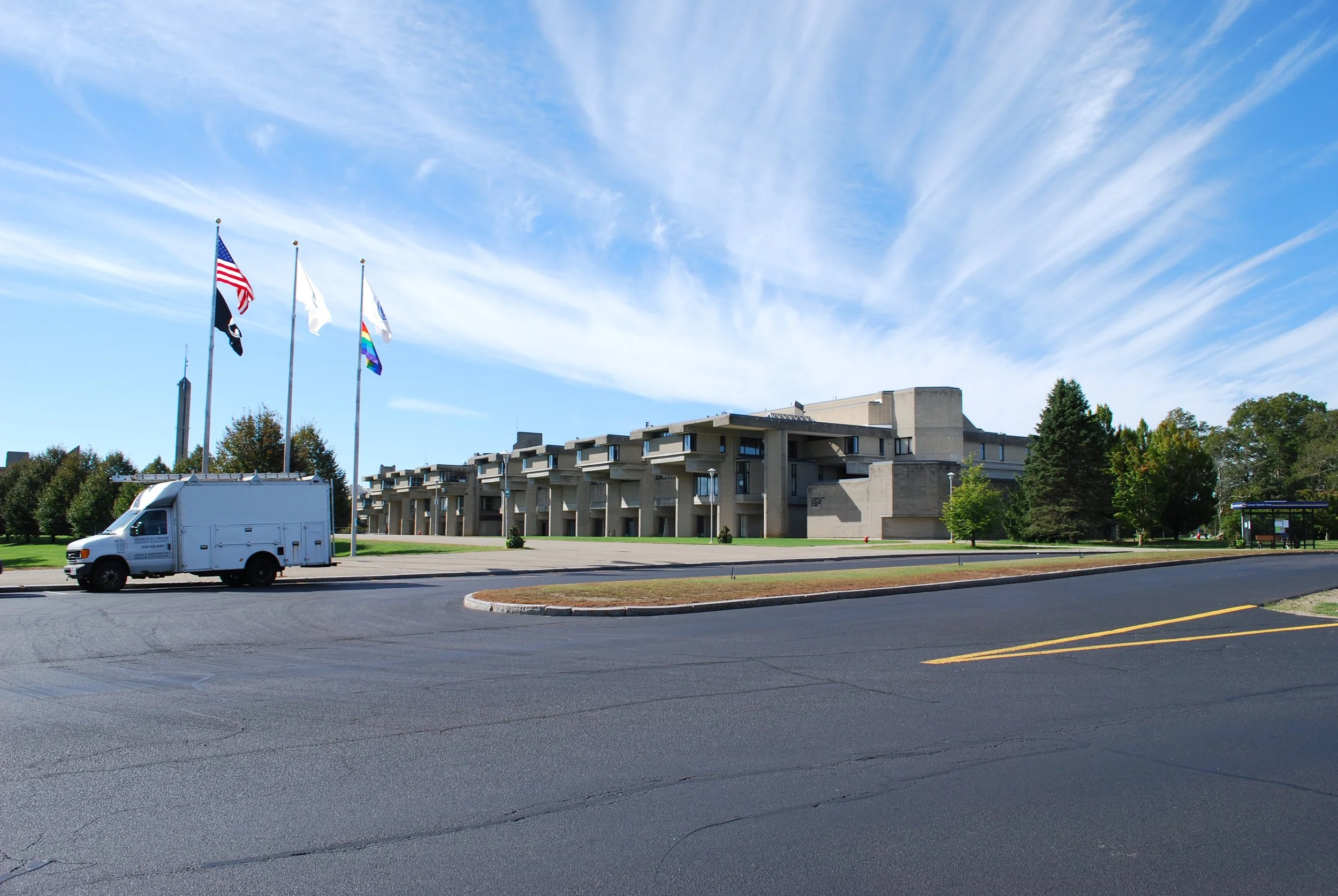
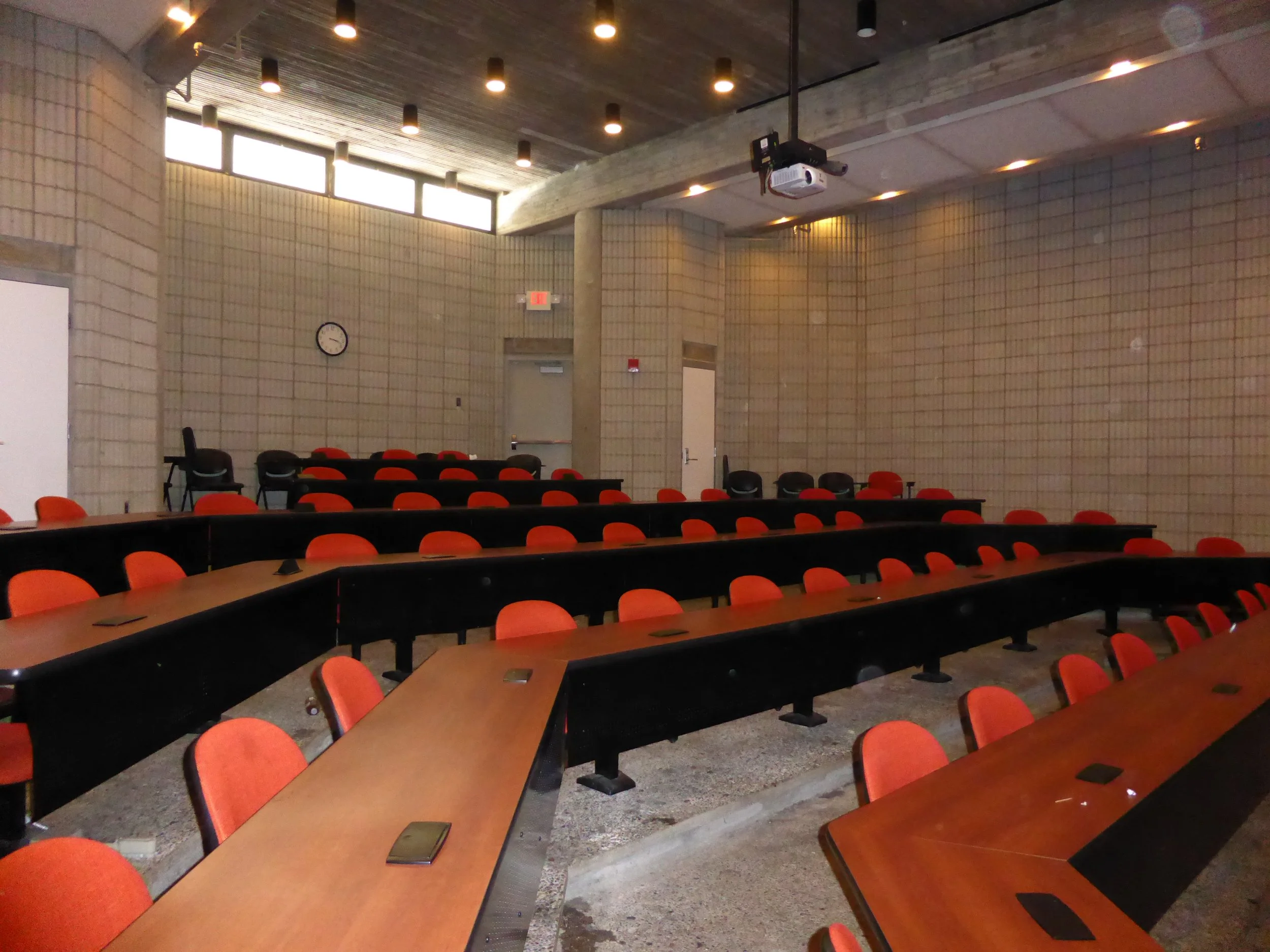
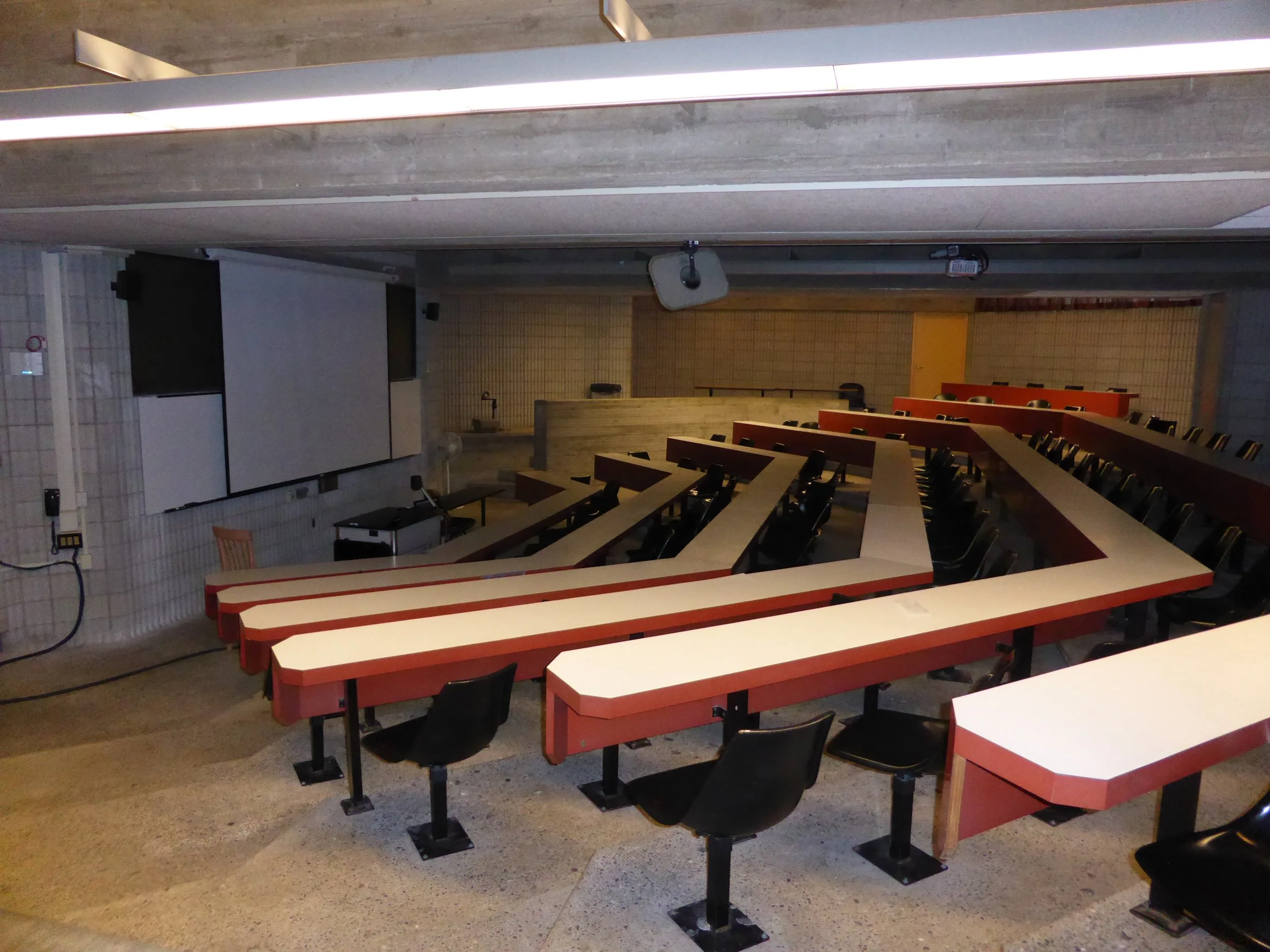
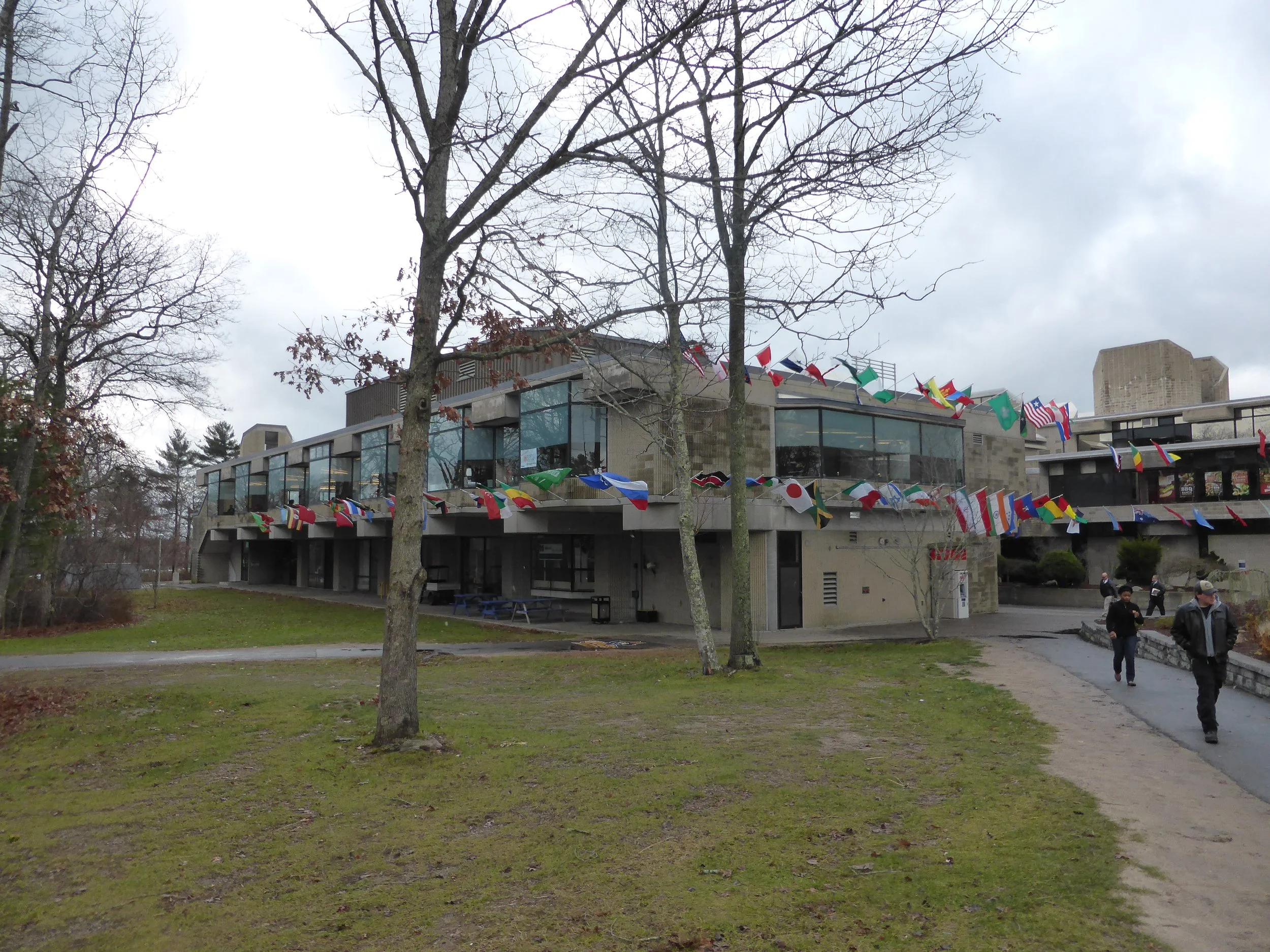
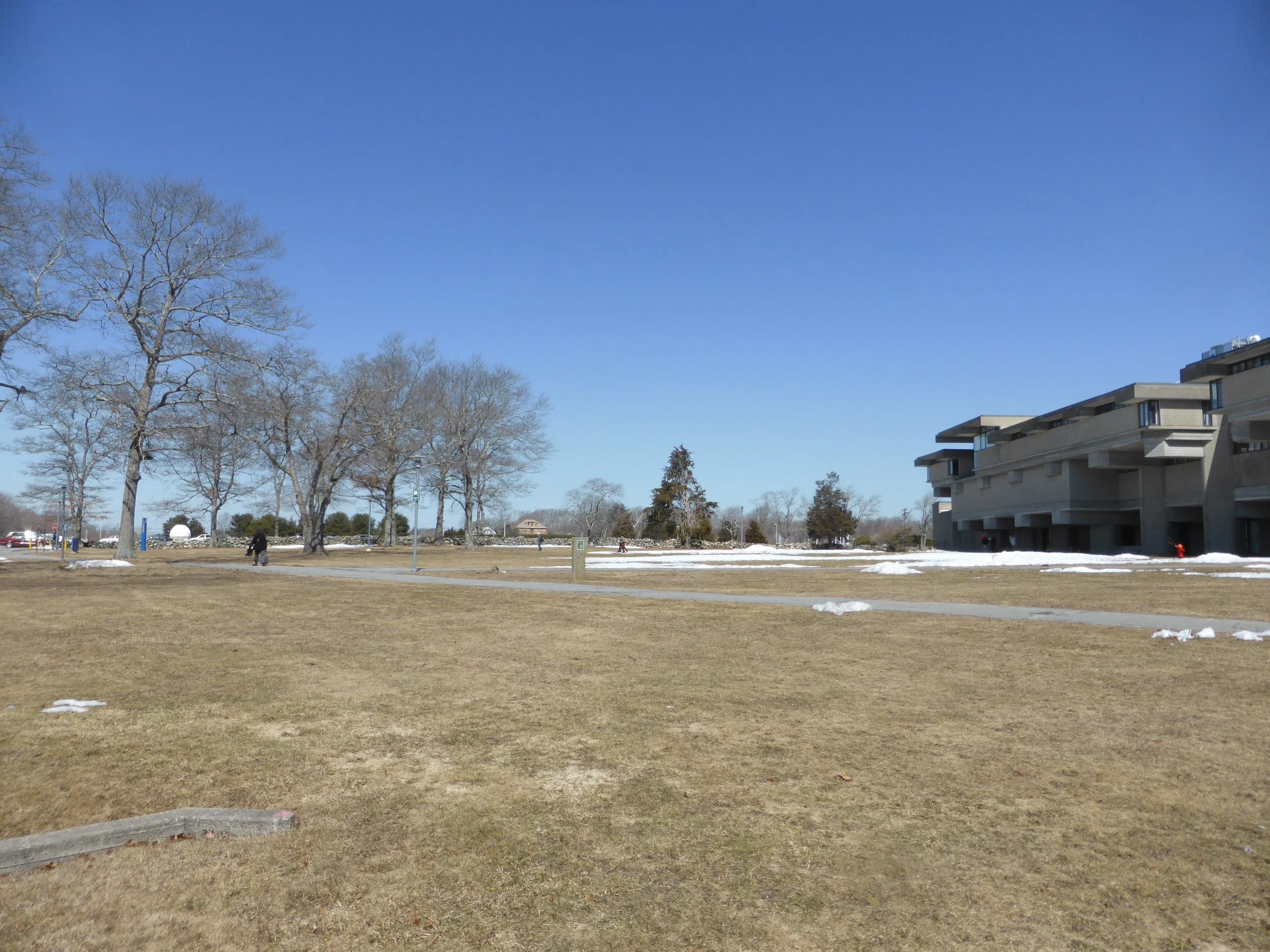
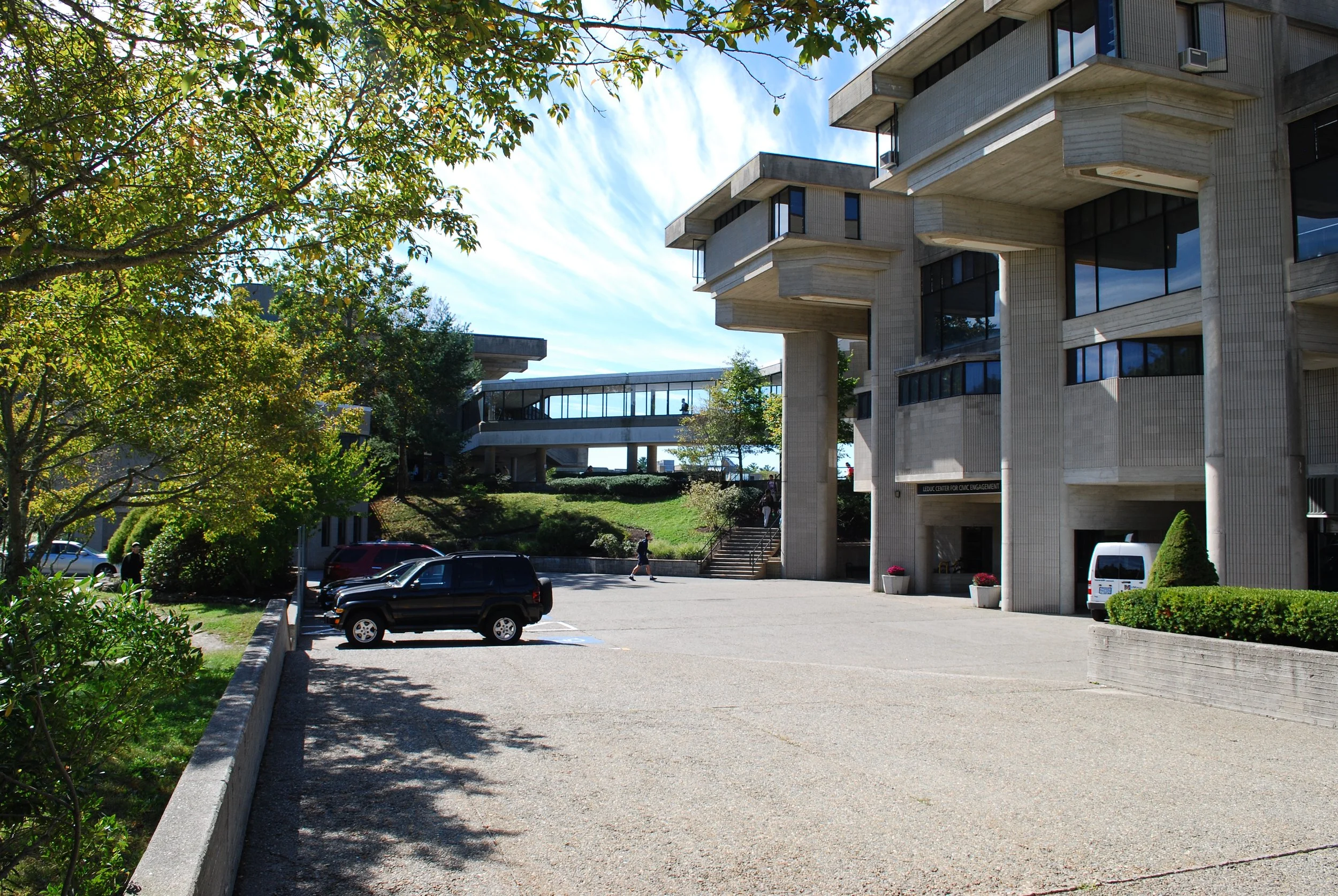
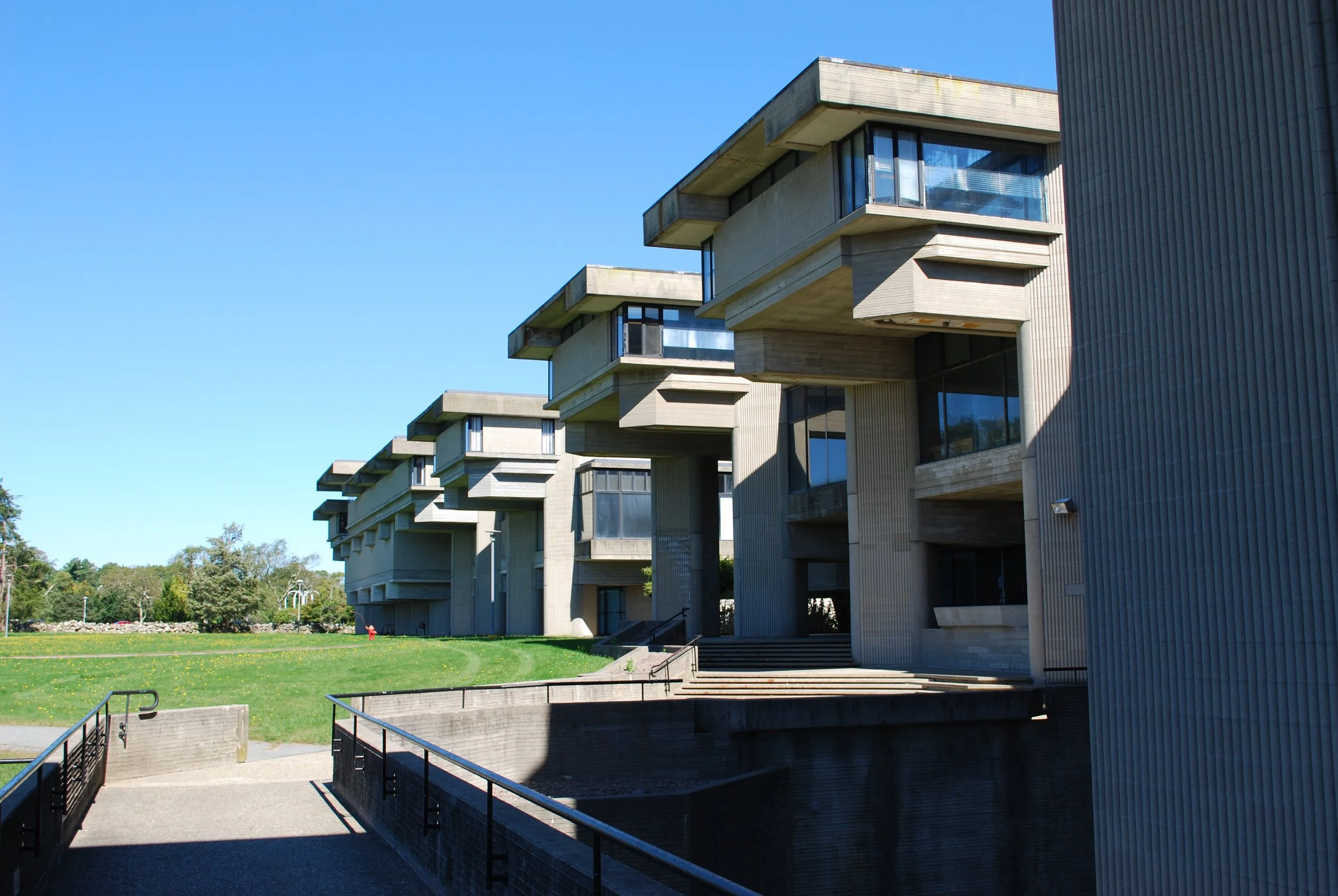
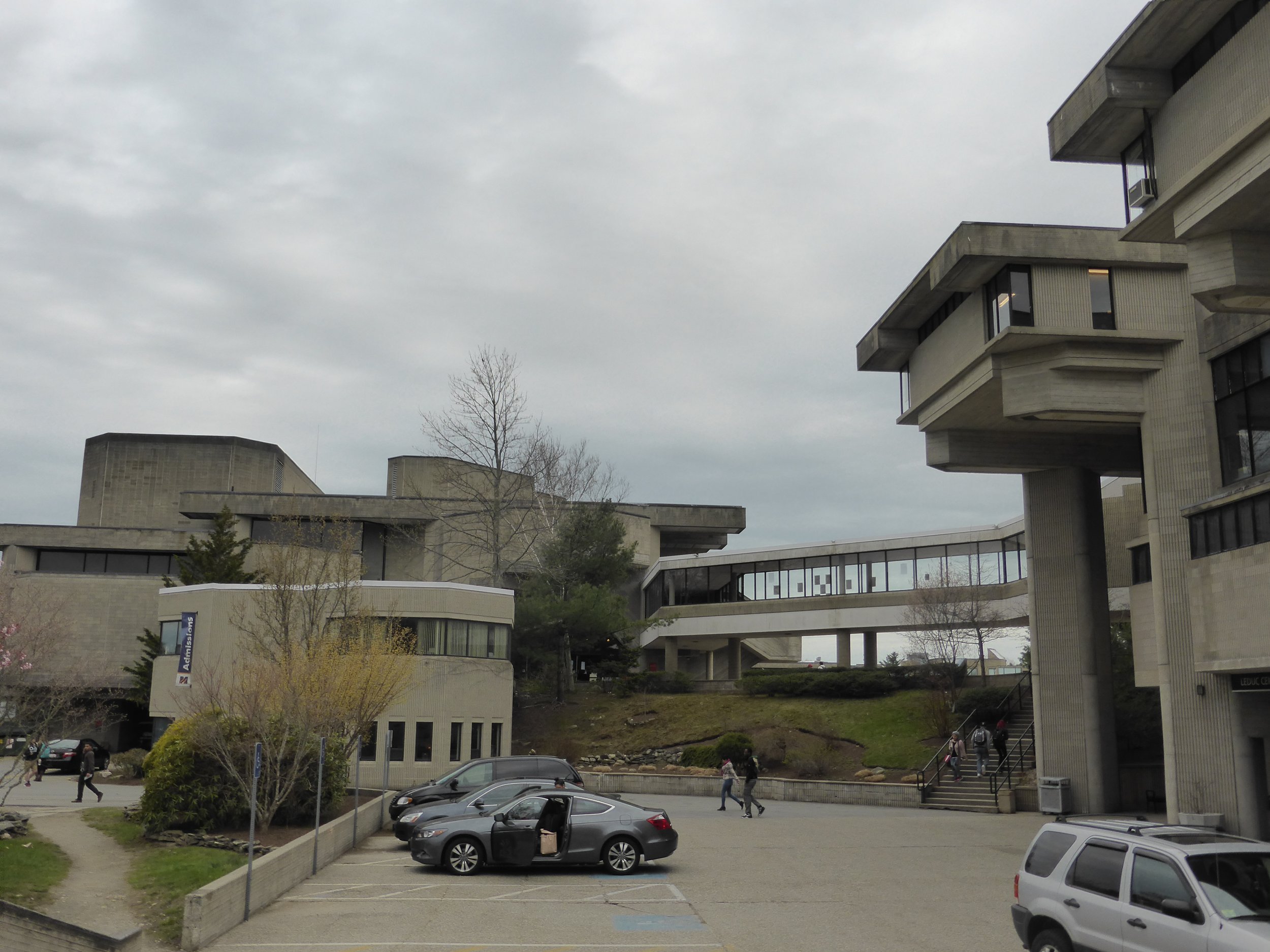
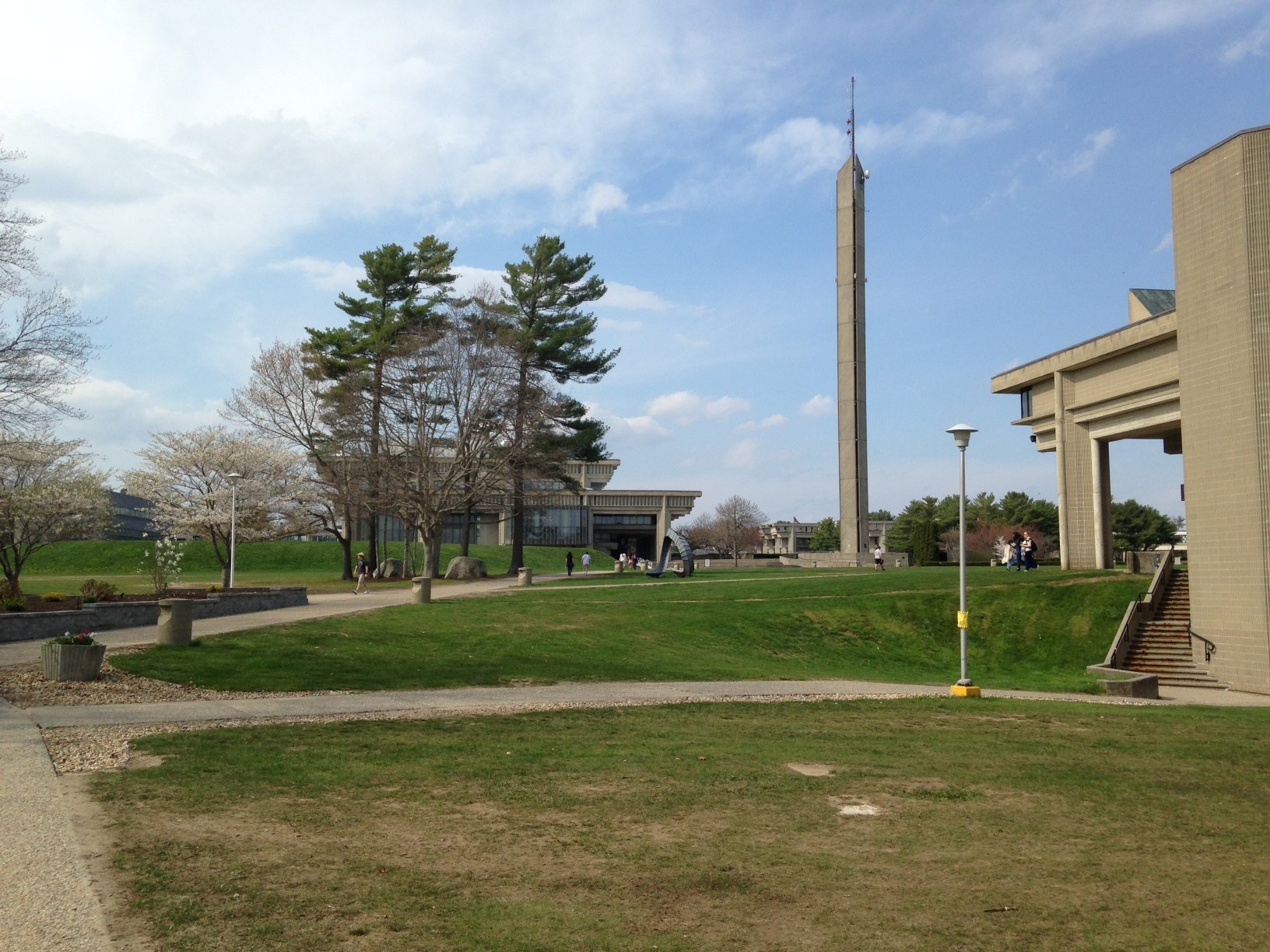
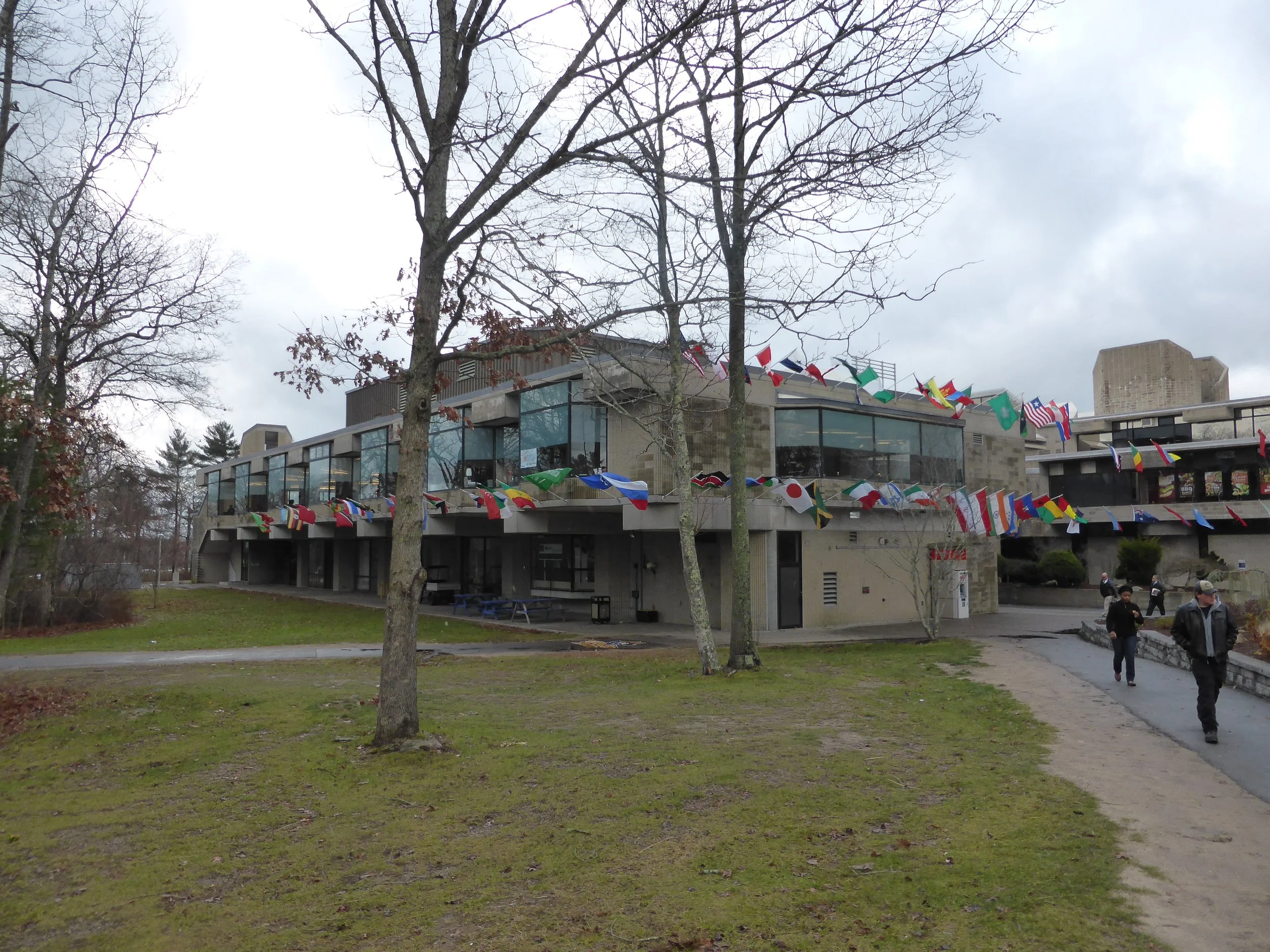
The existing academic buildings were designed so that the first and second floors contained classroom spaces of various sizes, and the third floor contained offices. The sculptural building forms create a condition where the first, second, and third floor do not vertically align, and create a compressed covered exterior pedestrian pathway. Because the ground floor classrooms are set back, less natural light is able to filter into the space.
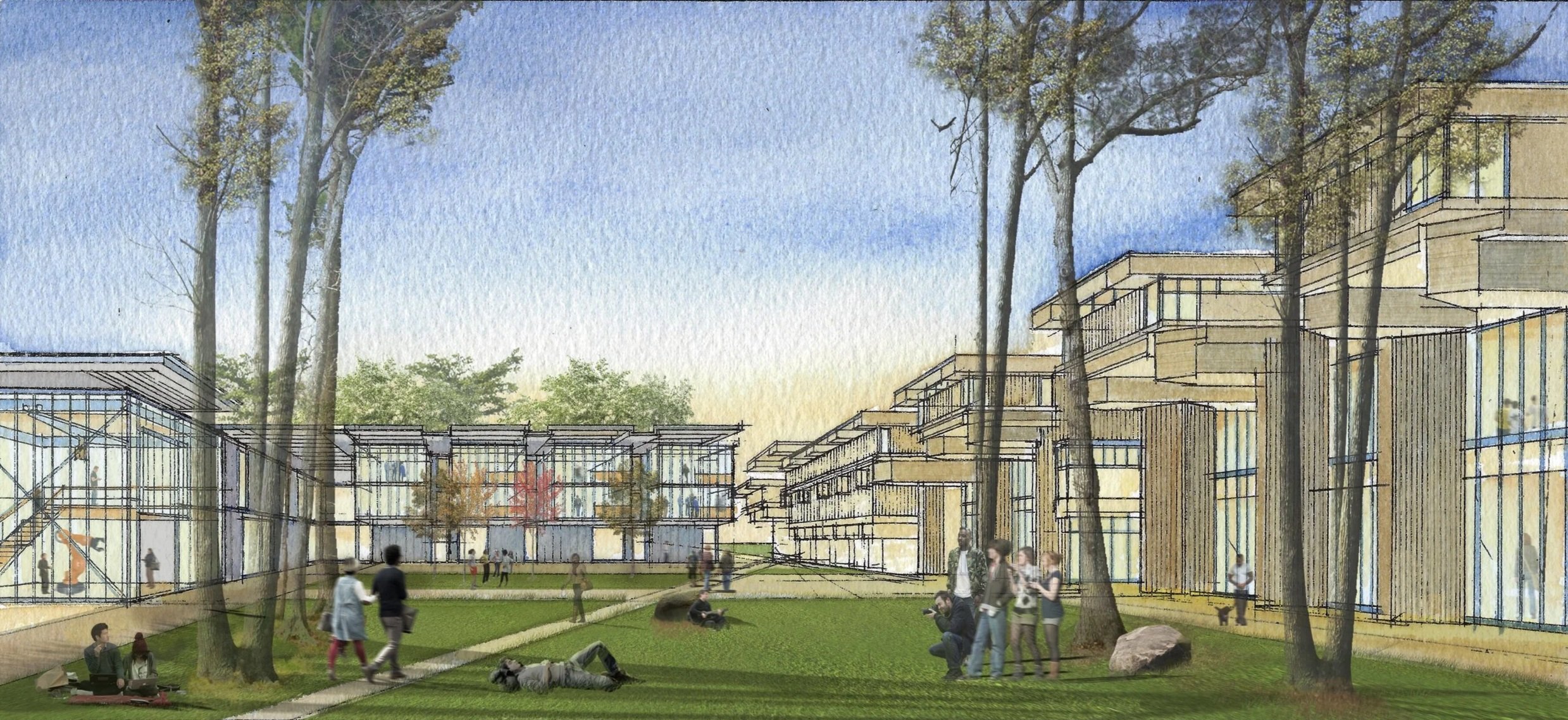
Reinforcing Campus Community
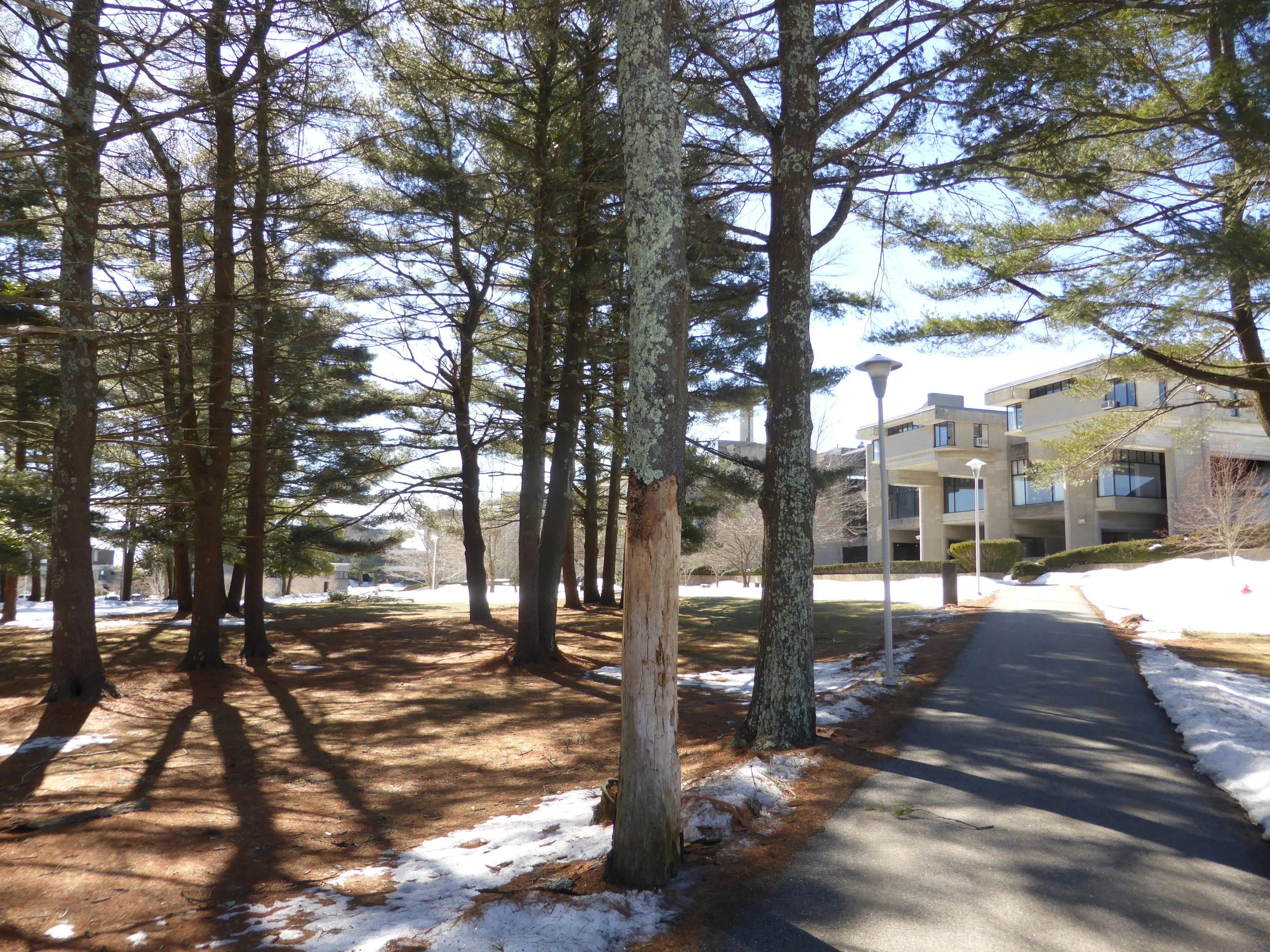
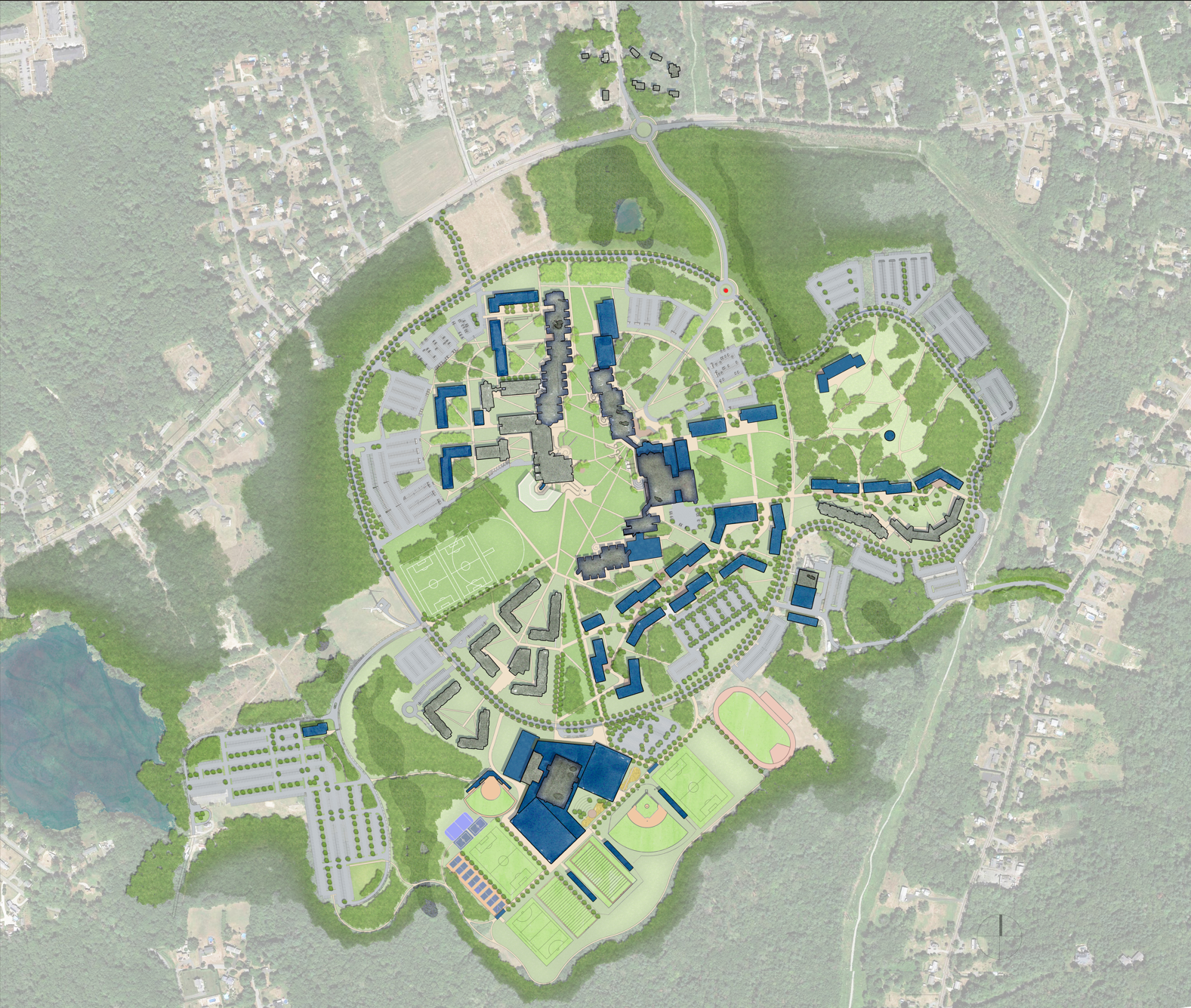
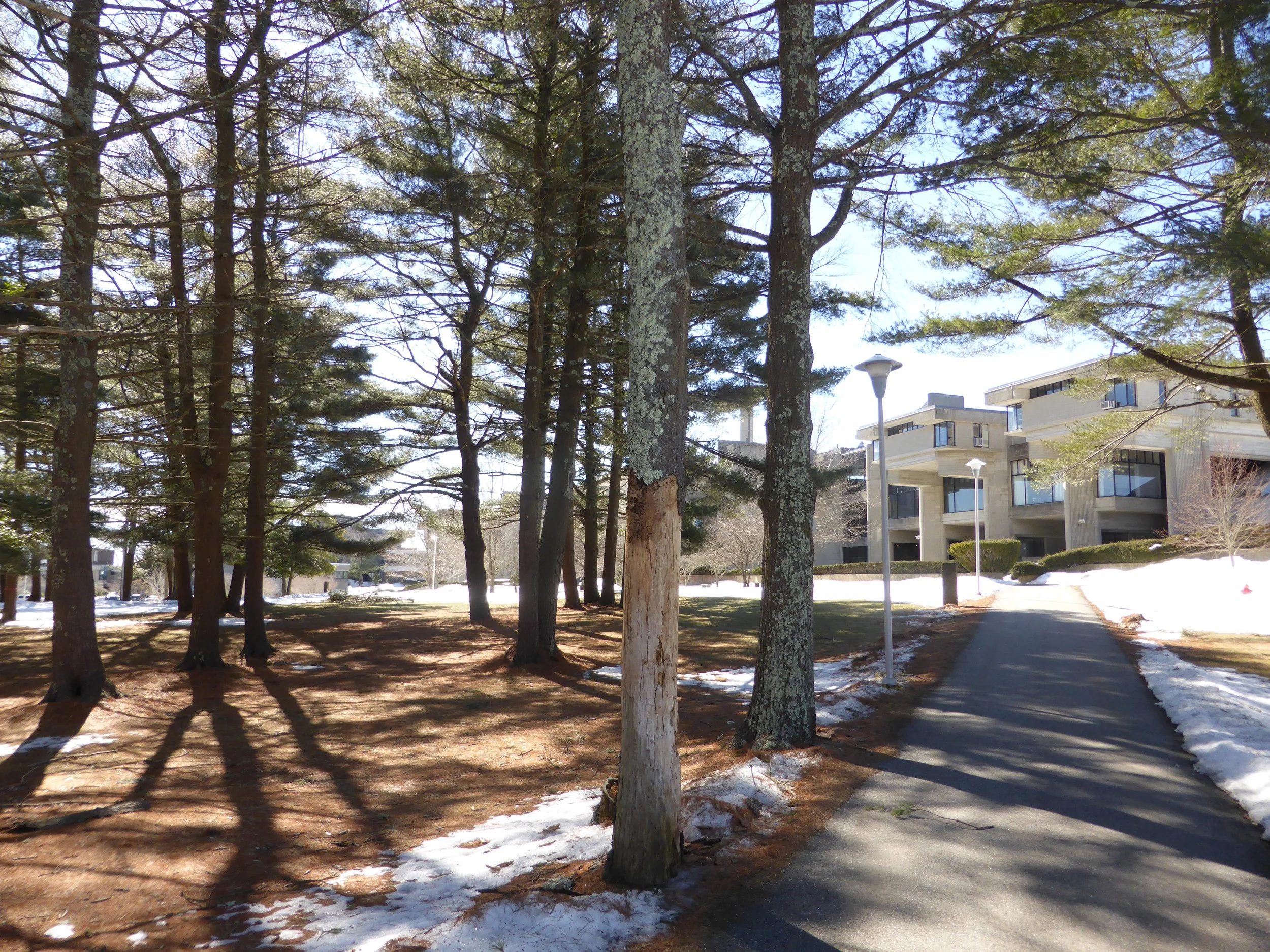
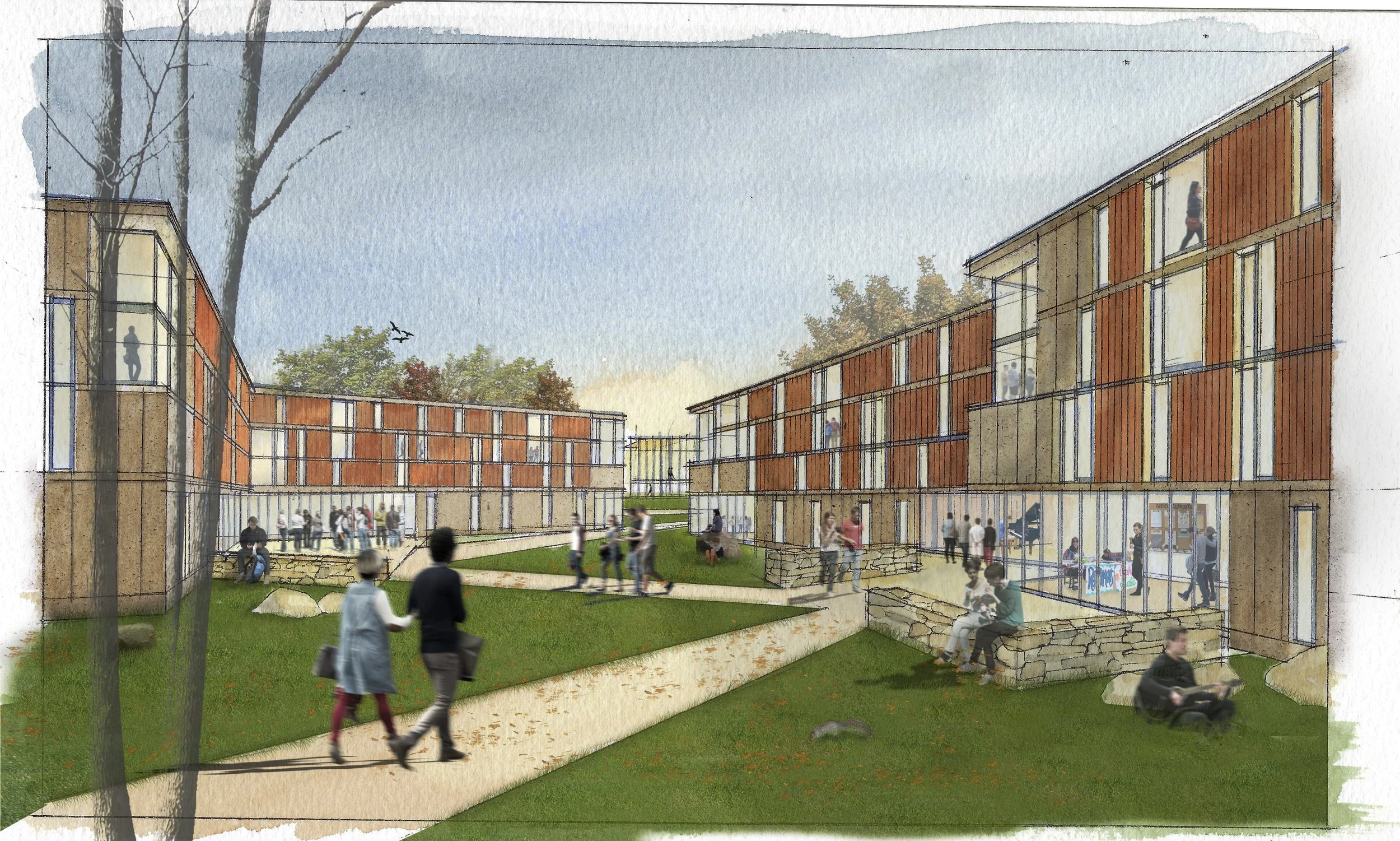
As the demand for commuter parking reduces with the increasing residential population, it allows for the native woodland to cross Ring Road, creating wooded bands. New mixed-use residence halls with an active ground floor of classrooms and collaborative spaces are proposed to be located along the ring and pedestrian loop. This series of buildings can act as a flex space for both academic and residential renovation and new construction by allowing additional class space and beds. The site design strives to celebrate the idea of a campus in the woods, with buildings intentionally located to create a dynamic relationship with each other and the existing stands of trees.
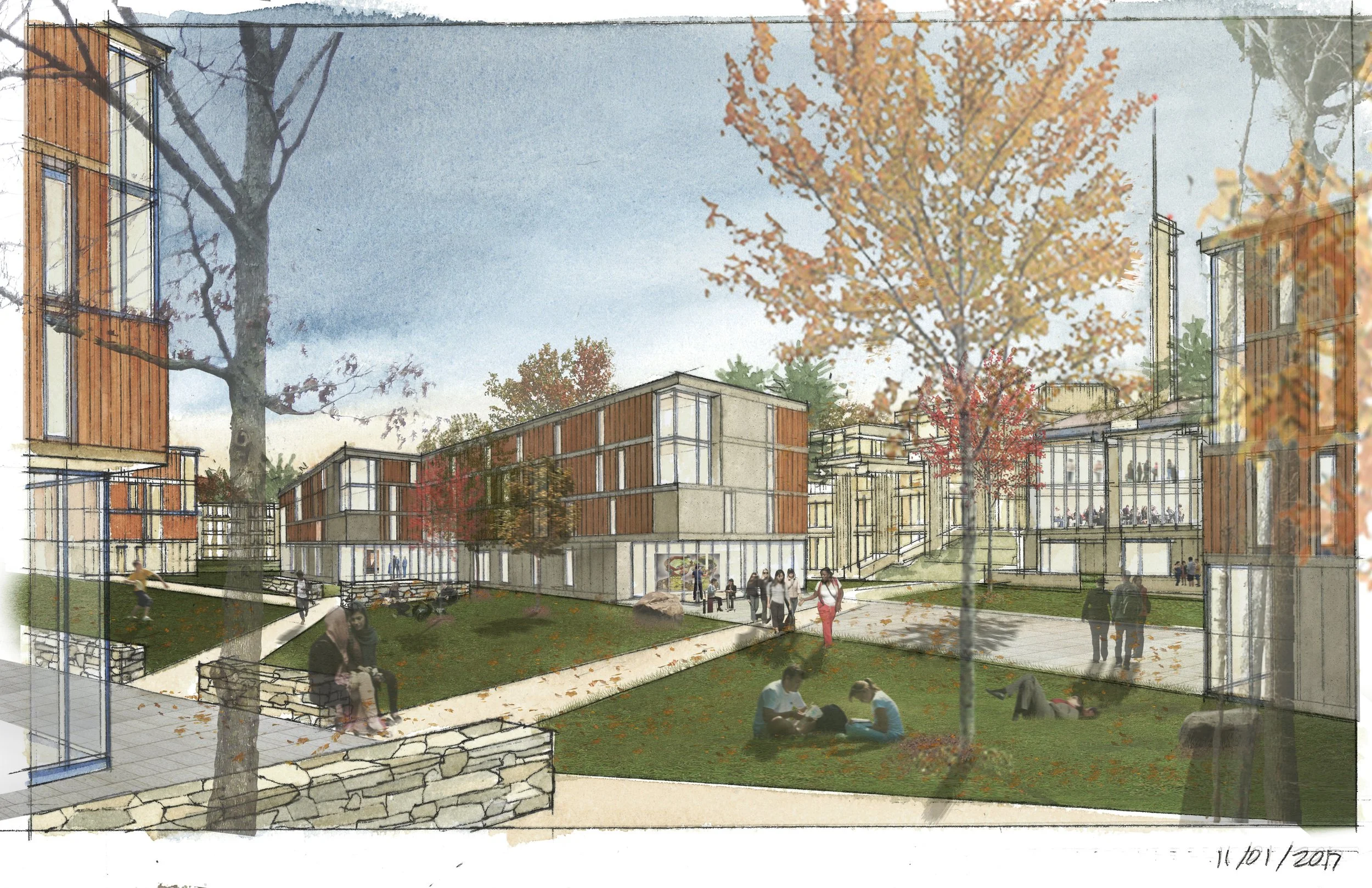
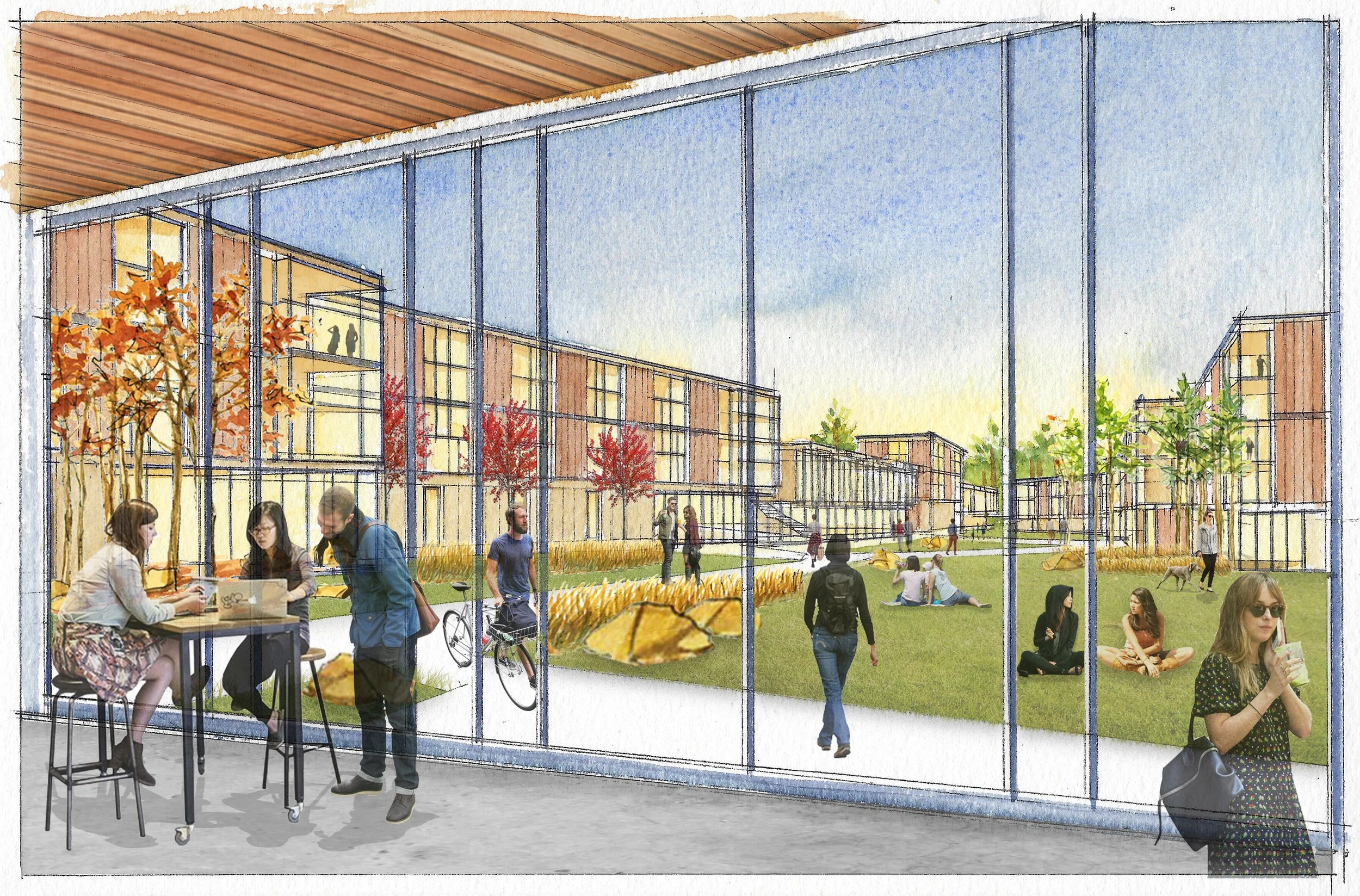
With the construction of the first-year commons and additional new sophomore and junior year commons, this quadrant provides an opportunity to create a new residential area set in the “woods” but still connected to the core campus. A new woodland walk is created in the concentric pedestrian ring bordered by the new housing, and throughout the walk the ground level amenities of cafe, retail, and study and lounge spaces, animate the residential village.
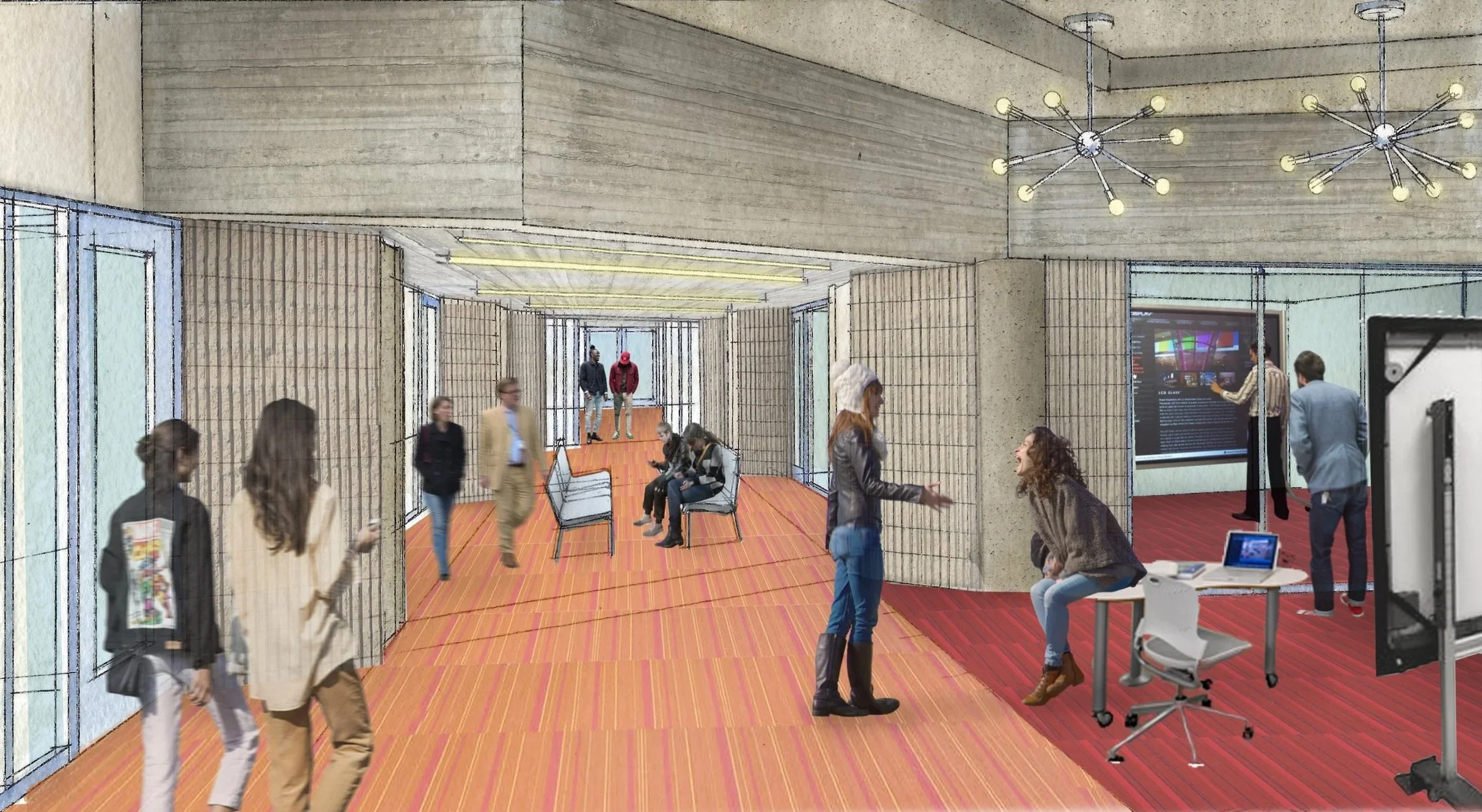
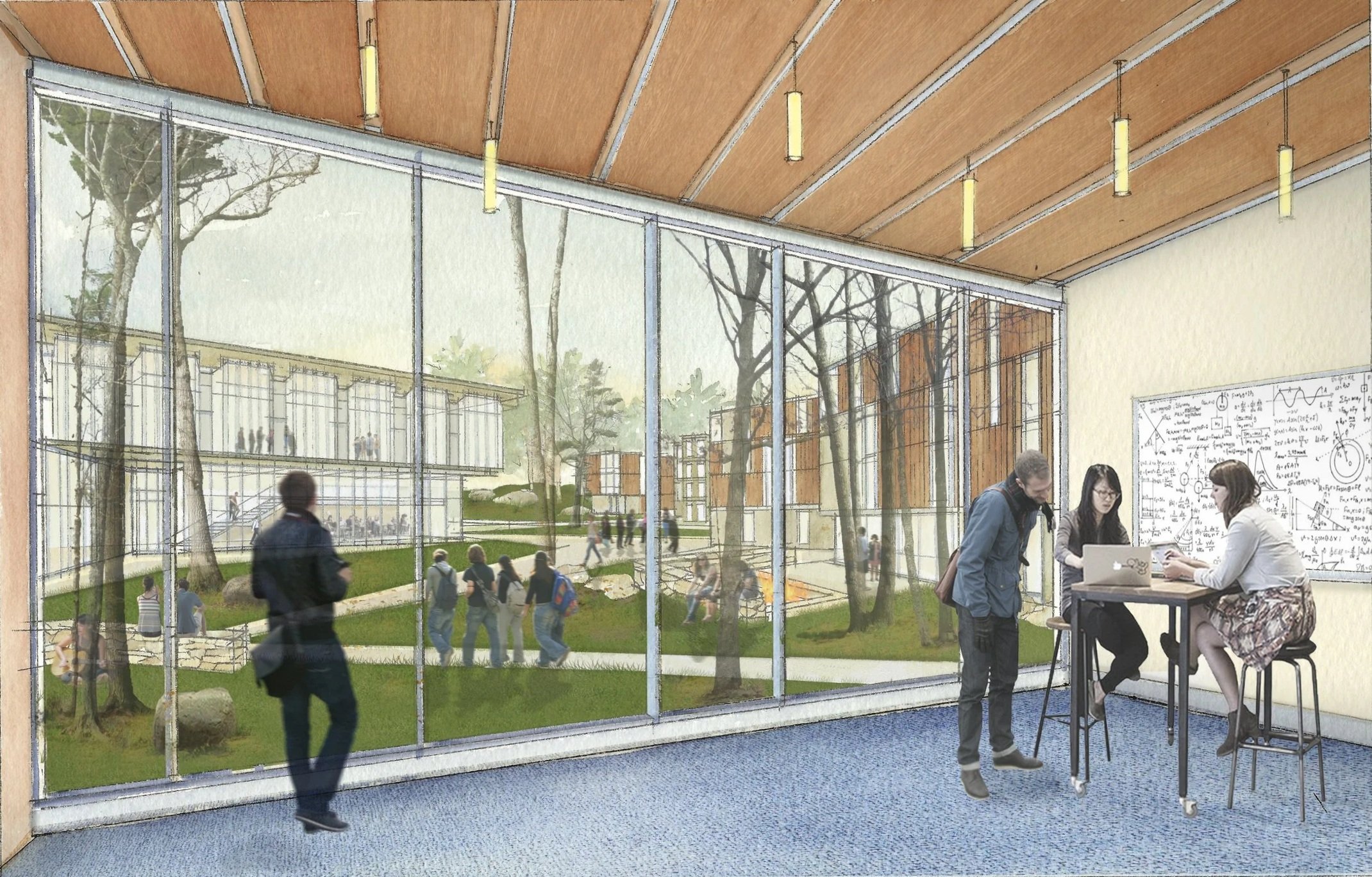
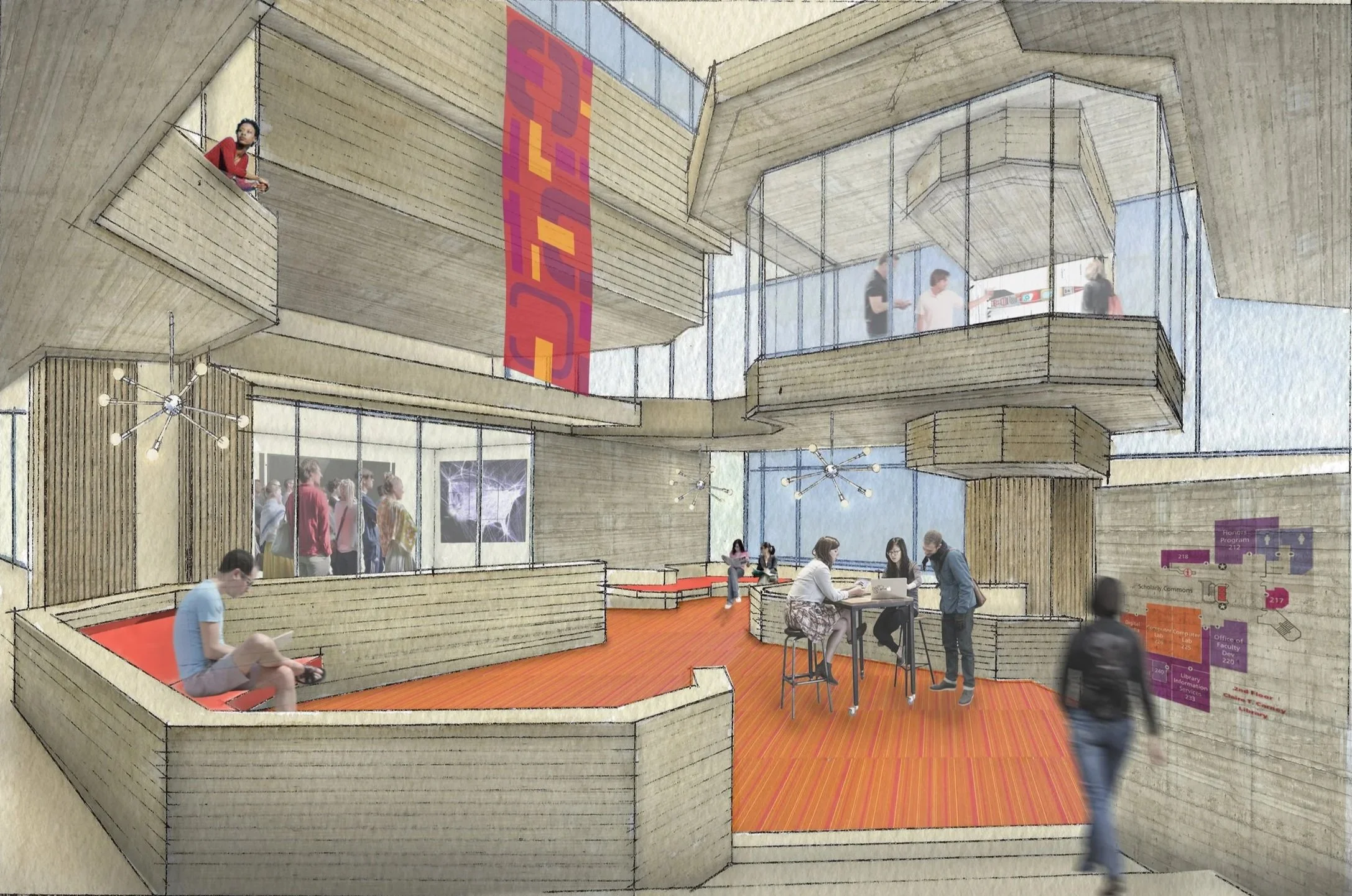
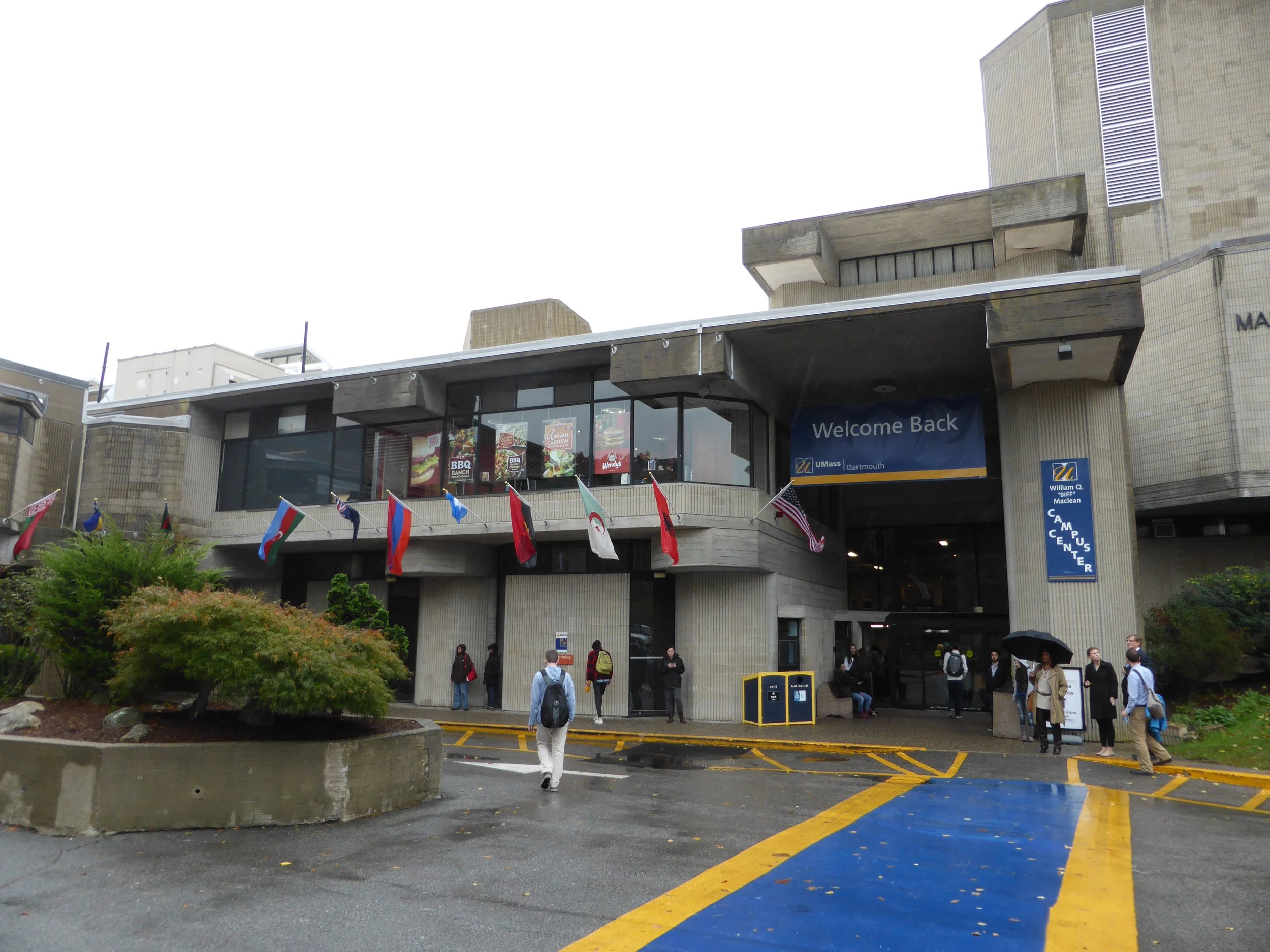
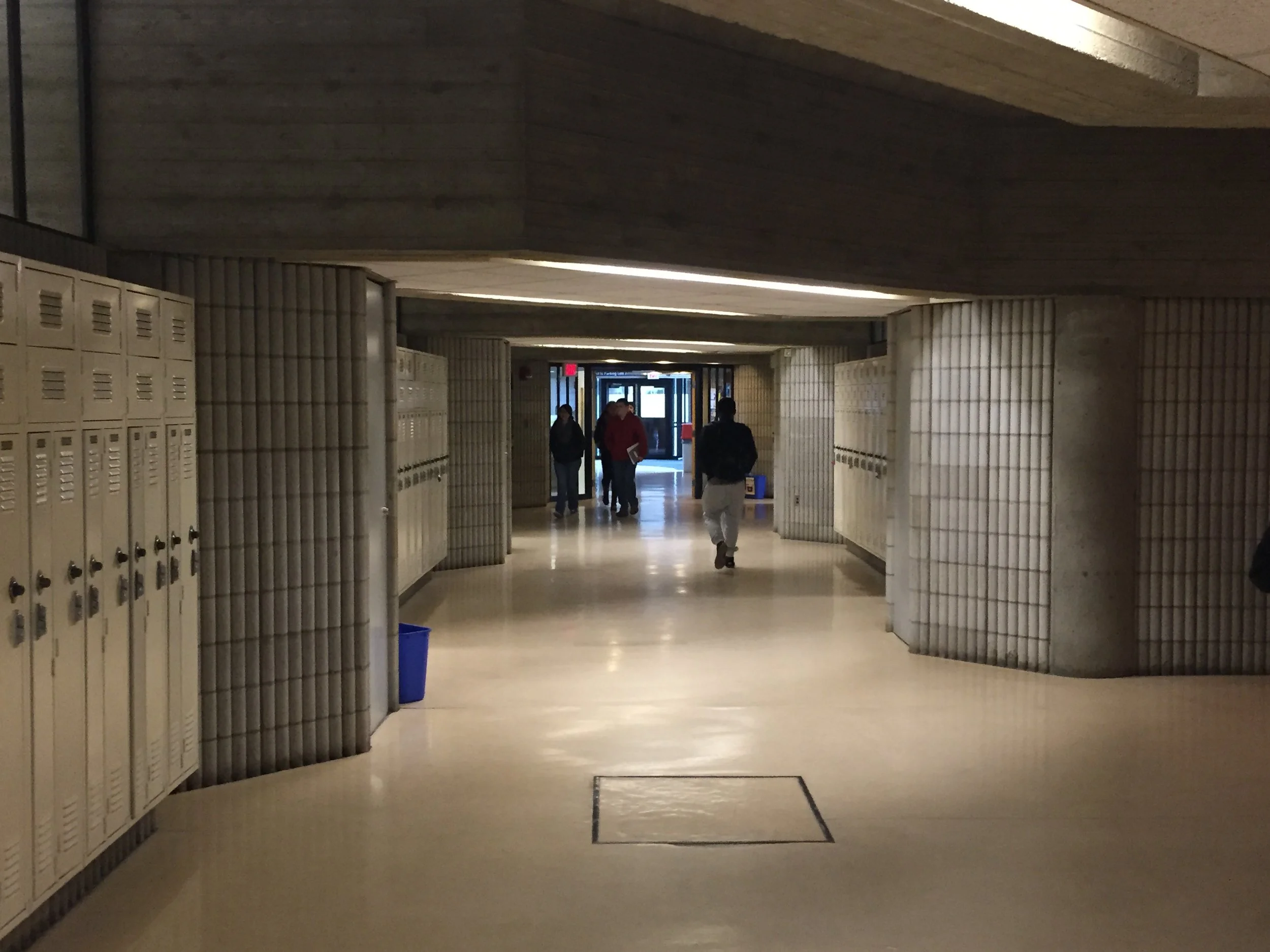
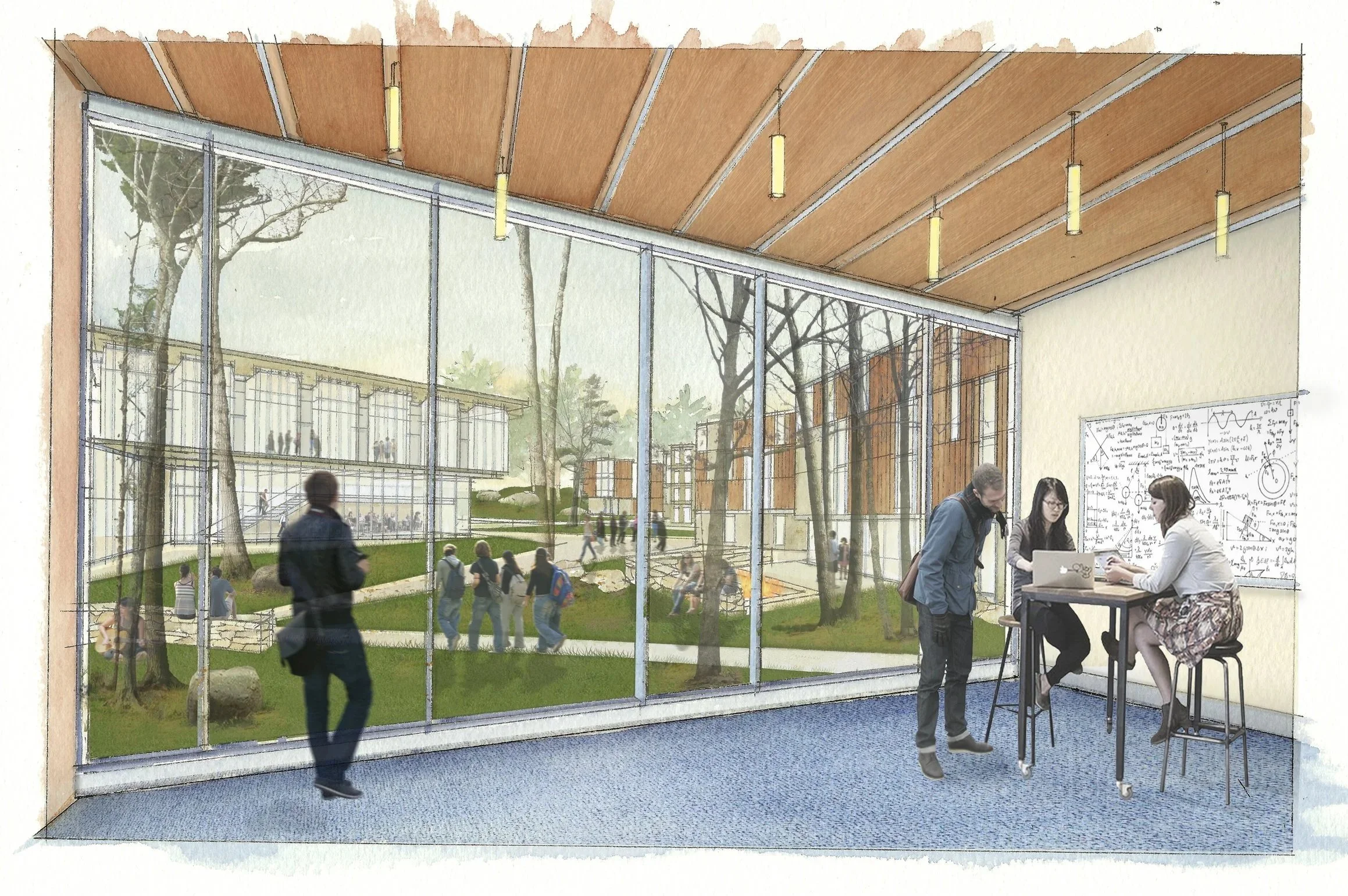
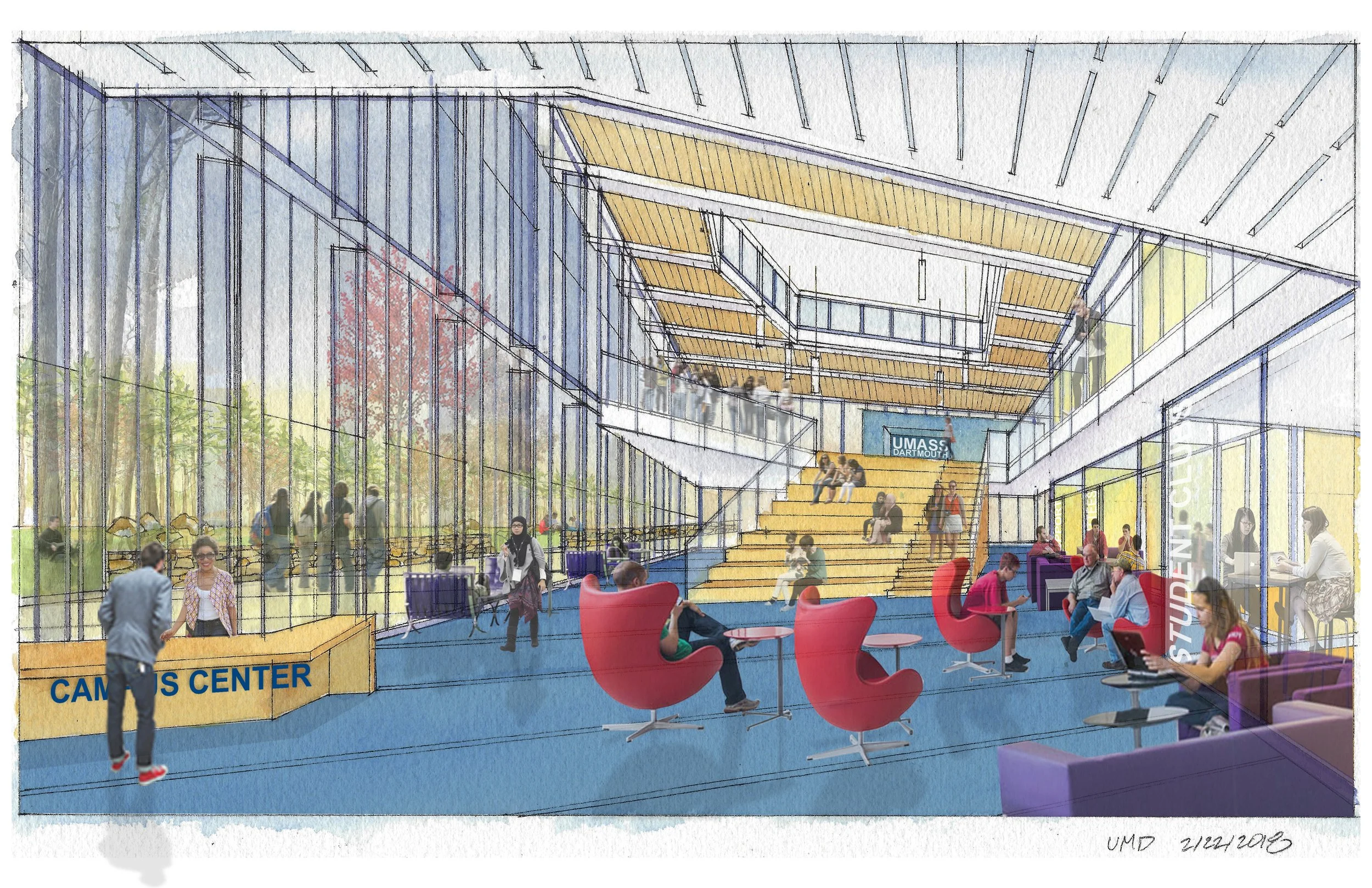
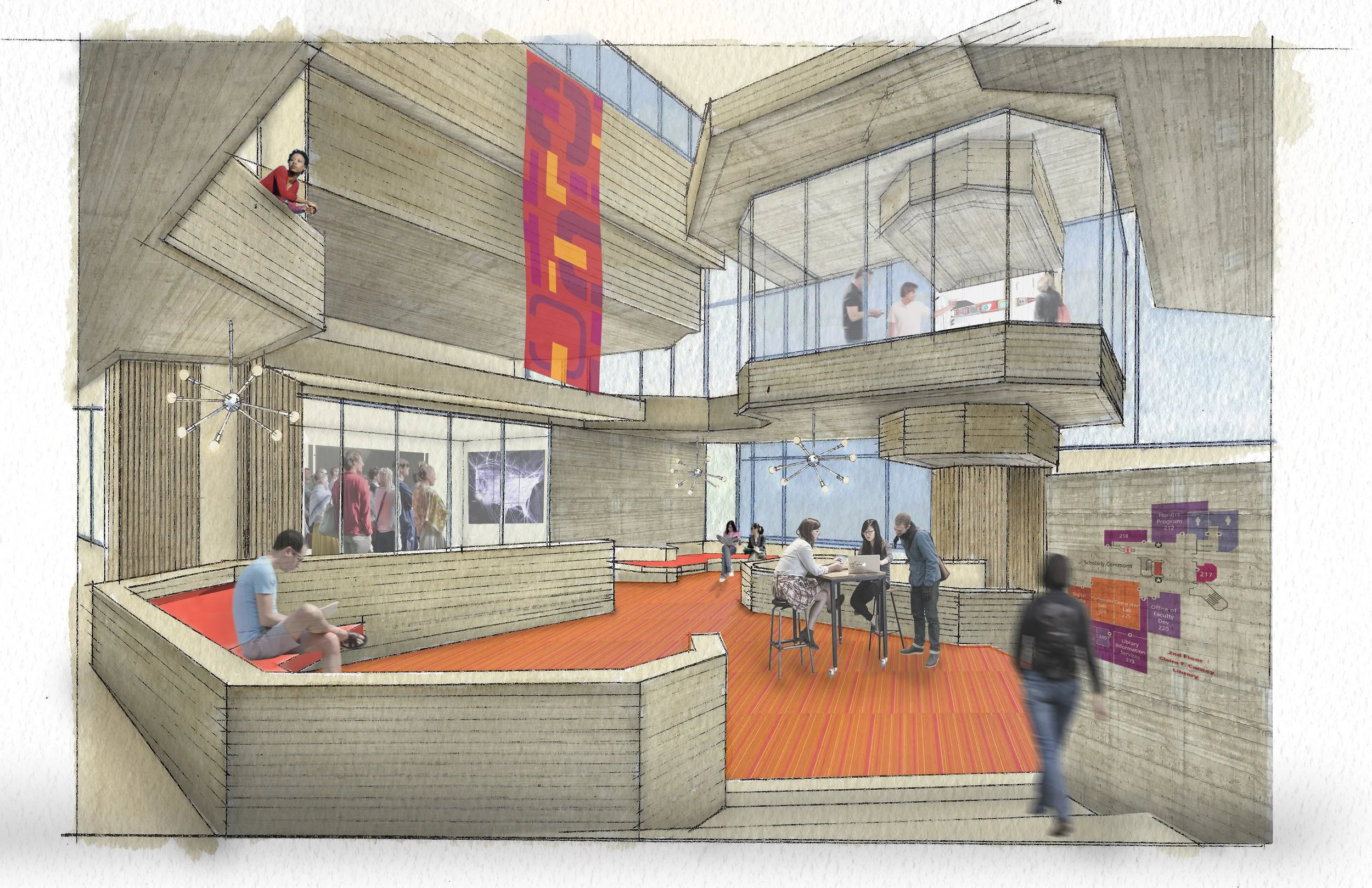
The majority of buildings on the UMD campus have a monotonous and imposing color palette of fluted concrete blocks; introducing brightly colored surfaces into the atriums, corridors, and classroom spaces creates a vibrant and energized atmosphere and introduces a more cohesive interior way-finding system into the building. By partially or fully enclosing the cantilevered atrium trays with glass partitions, the atriums are transformed in a manner that connects to the existing Rudolph formal geometries, and creates acoustically separated spaces for smaller group meetings.
Rudolph designed the interior spaces of the academic buildings to facilitate spontaneous human interaction and exchange. As the needs of UMass Dartmouth’s increasingly resident-based students continue to evolve, it is important that these existing social and gathering spaces be transformed to align with these campus principles.
The renovation of the Claire T. Carney Library has proven very successful in providing students with flexible and collaborative learning environments that are adaptable to the evolving higher education institution pedagogy. This Campus Vision Plan proposes the re-imagining of the existing atrium spaces, using the Carney Library renovation as a guideline, to accommodate additional collaborative space distributed throughout campus to encourage interdisciplinary exchange.
connecting campus
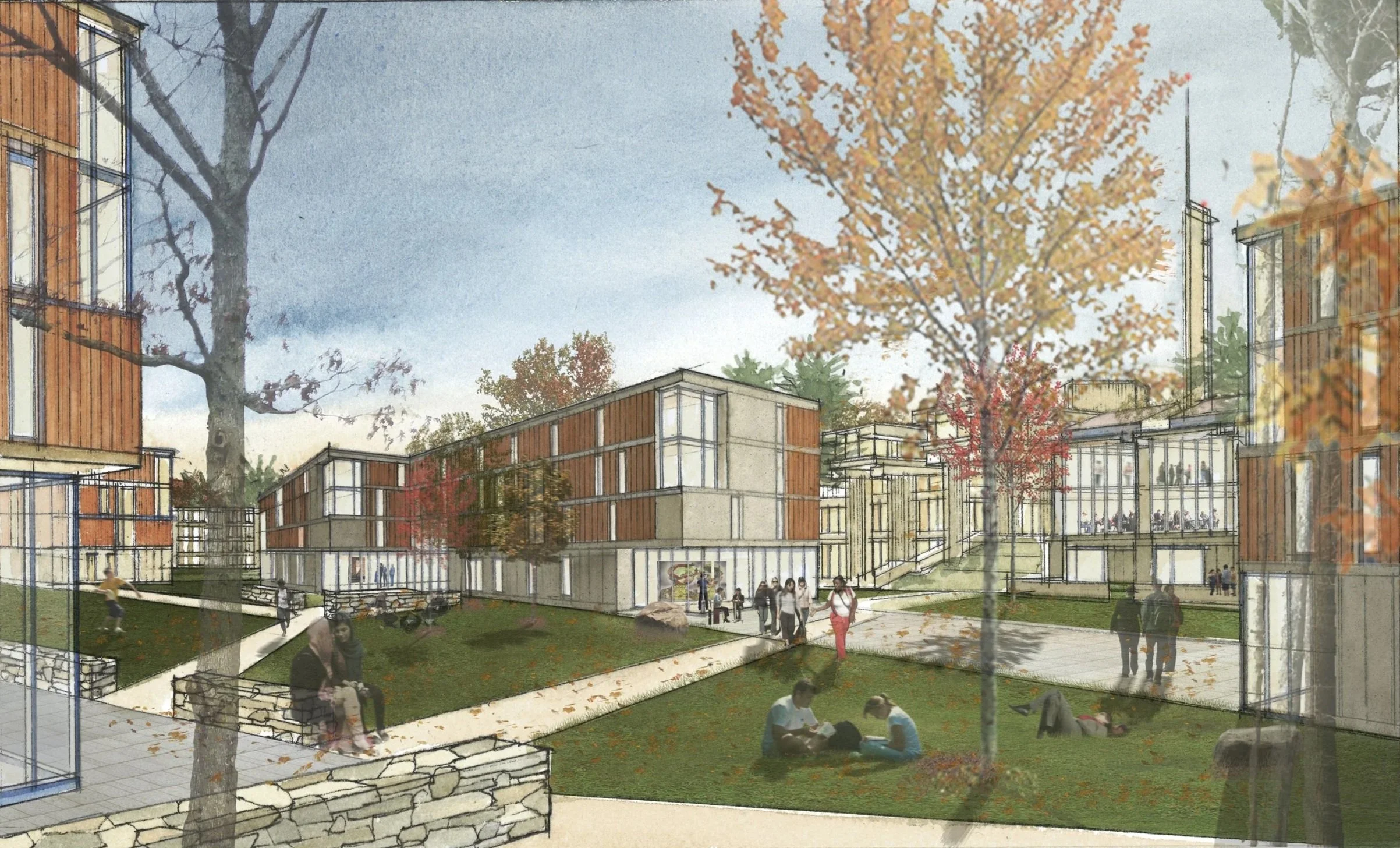
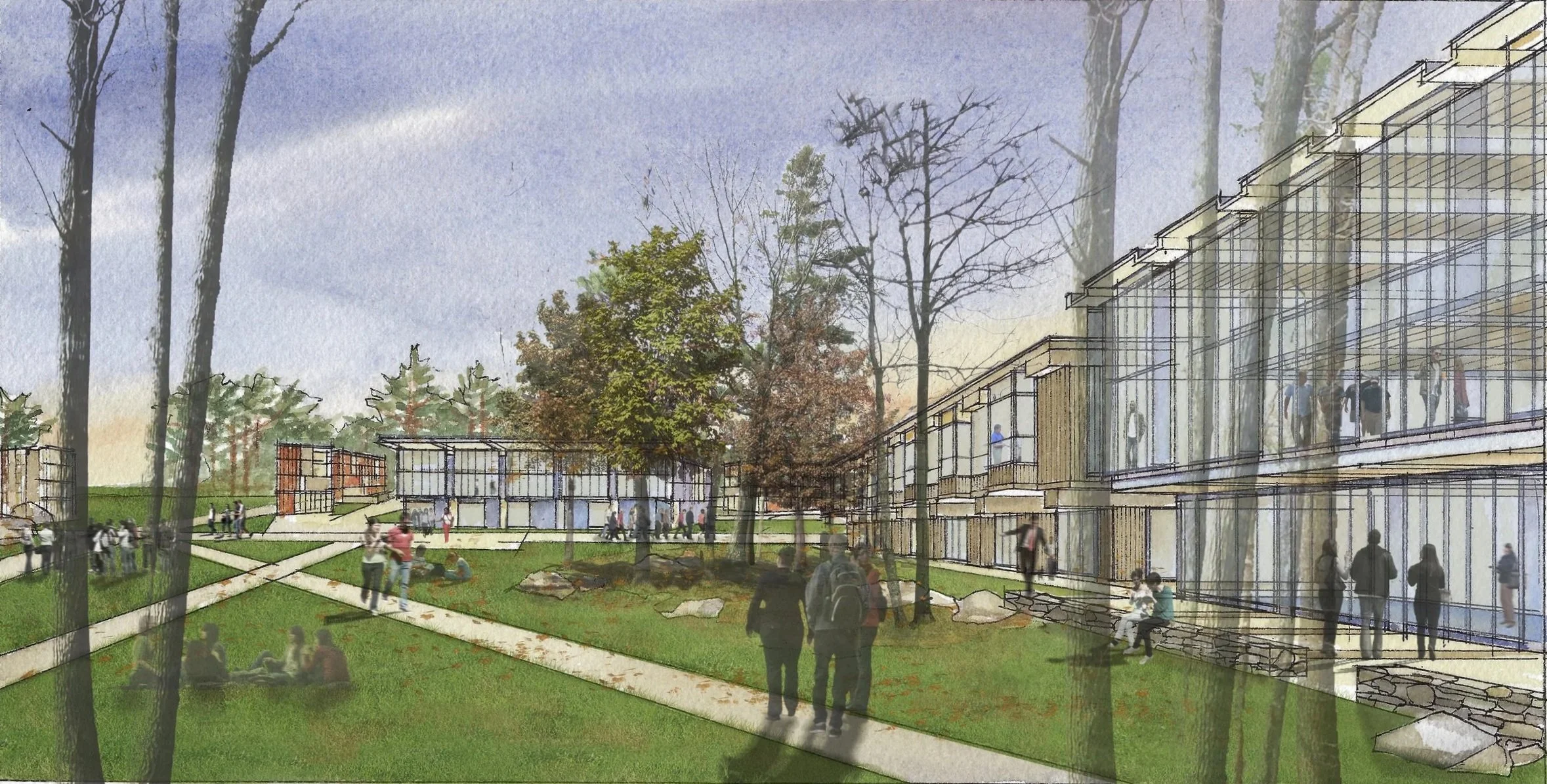
This Campus Vision Plan proposes removing a portion of the Ring Road that divides the existing first-year residence halls and the academic core of campus, as well as a transformed Student Union and brand new Dining Hall. These buildings will border the new East Lawn, now a pedestrian threshold between the Main Campus and East Village.
Currently, the residential housing on campus lacks outdoor spaces that allow for a wide range of student interaction, and most residential buildings have no spaces for students to congregate in. The Campus Vision Plan envisions a hierarchy of open space that encourages and supports social interaction between students, and builds a strong sense of community amongst residents as well as commuters, by creating a sequence of spaces and connections scaled as students travel from classes to their housing.
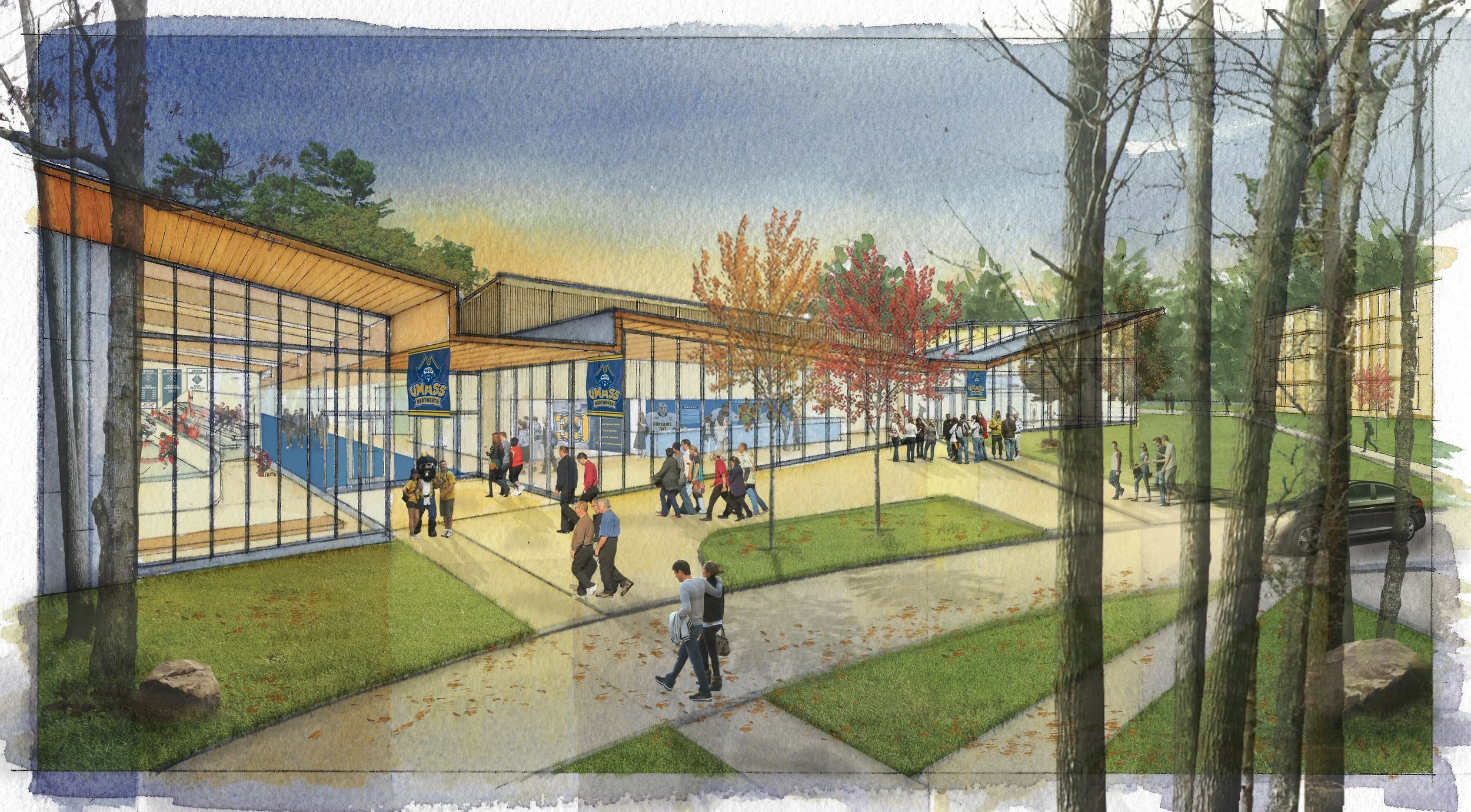
A key feature of the land plan is the creation of a student life ring. This would serve as a main pedestrian travel way through the new residential neighborhood. This ring would connect the athletic and academic areas of the campus, as well as the existing sophomore dorms, which currently feel orphaned from the campus core. The new student life ring would be further activated by ground floor program spaces in the new residential buildings, such as cafes, fitness centers, and live/learn classrooms. This “main street” concept would greatly improve the social fabric of UMass Dartmouth student life.
The proposed residential buildings are placed to create semi-public open space for student recreation, while the outdoor spaces are generally located at building entries and provide generously paved spaces so that students can congregate. This layout strives to create a strong sense of community and improve the well-being of the student population.
making an impression
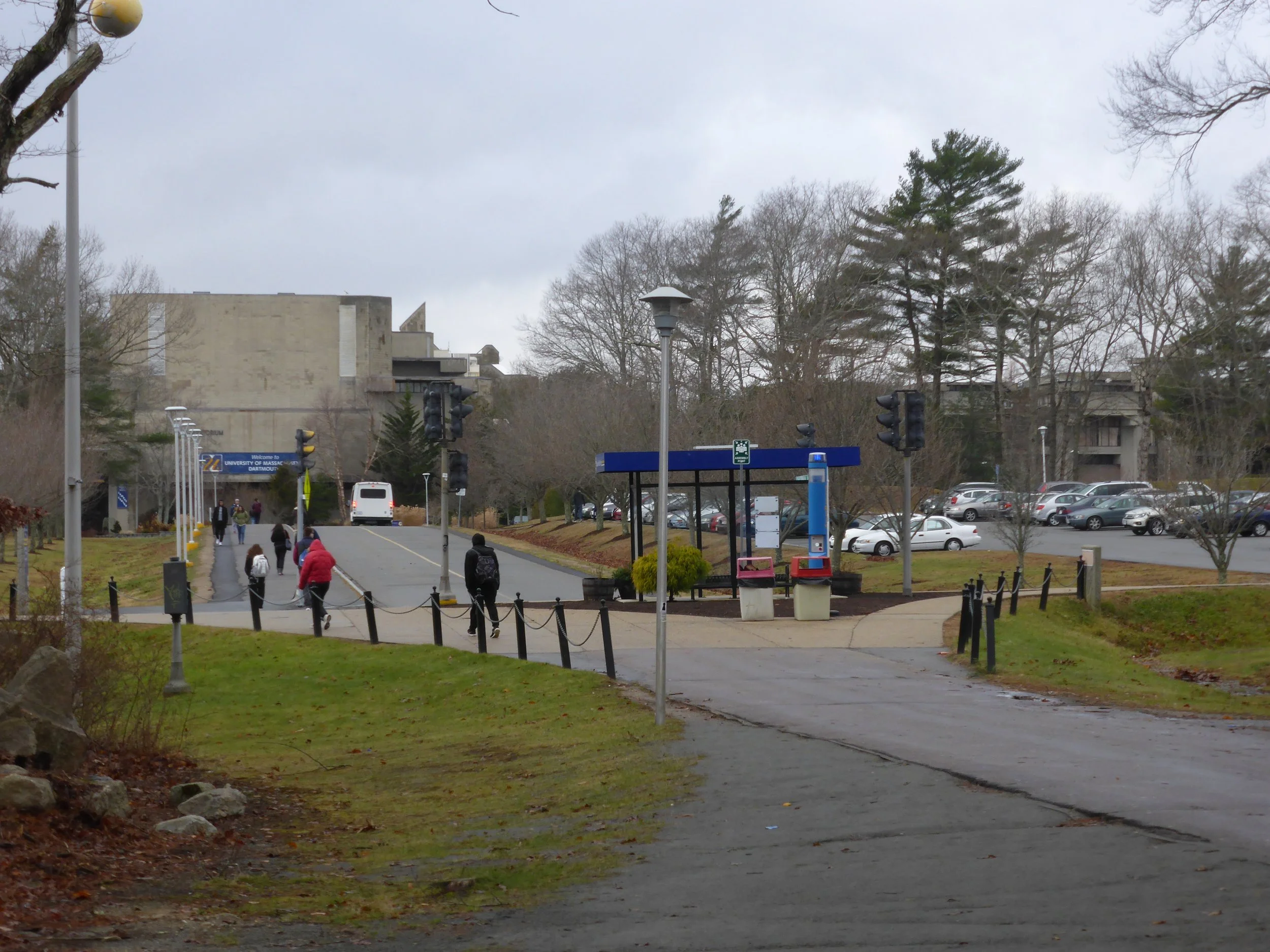
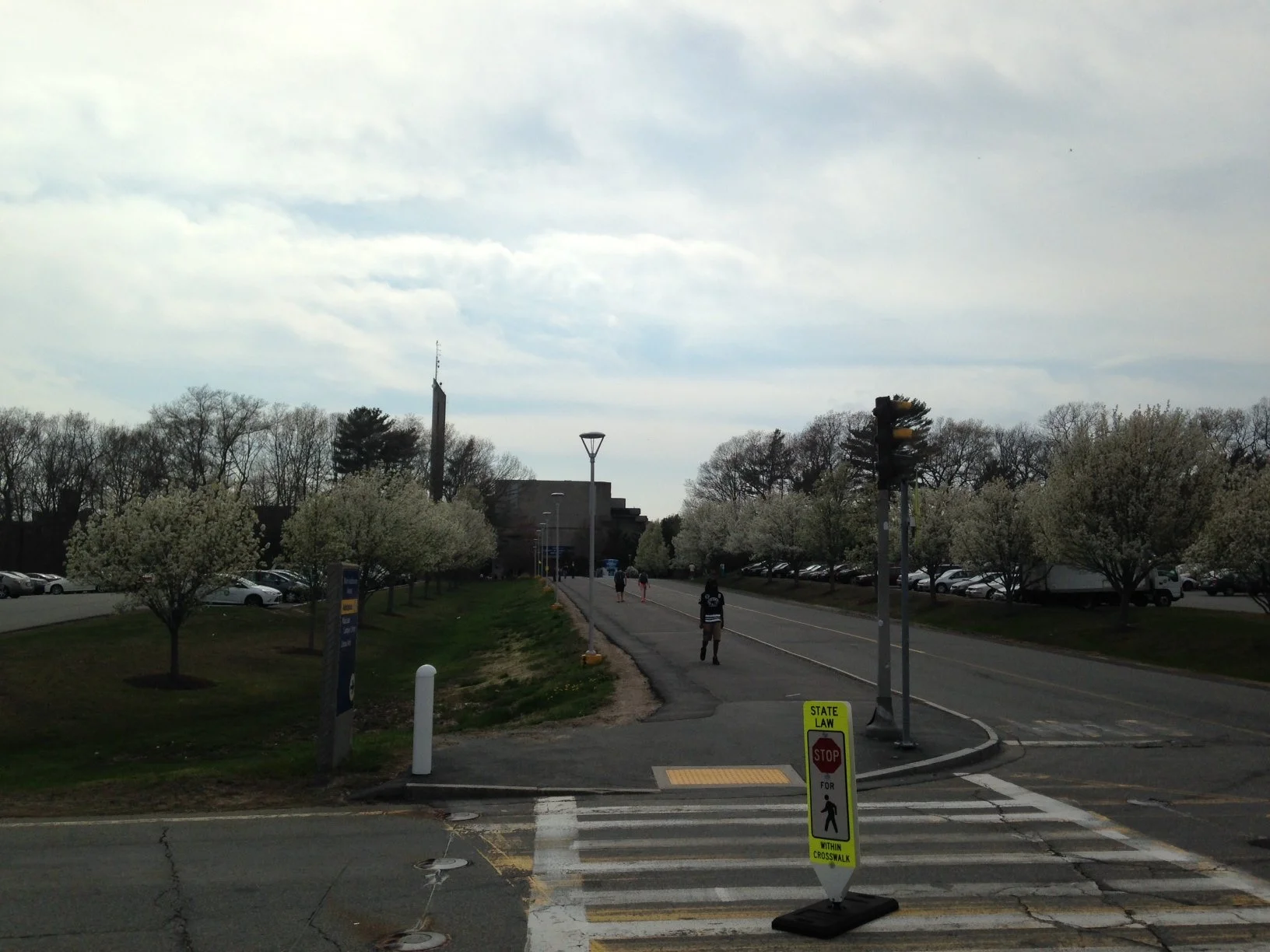
The Campus Vision Plan proposes relocating the entry road to align with Cross Road and wind through the existing woodlands in order to create a more visitor-friendly sequence, as well as displaying the beautiful SouthCoast woodlands setting to those entering campus. This relocation will create a much safer and scenic entry to the campus than the current configuration, and will make the visitor sequence easier for visitors to follow through a traffic circle at the intersection of the entry road and the Ring Road, clearly and deliberately identifying the visitor sequence.
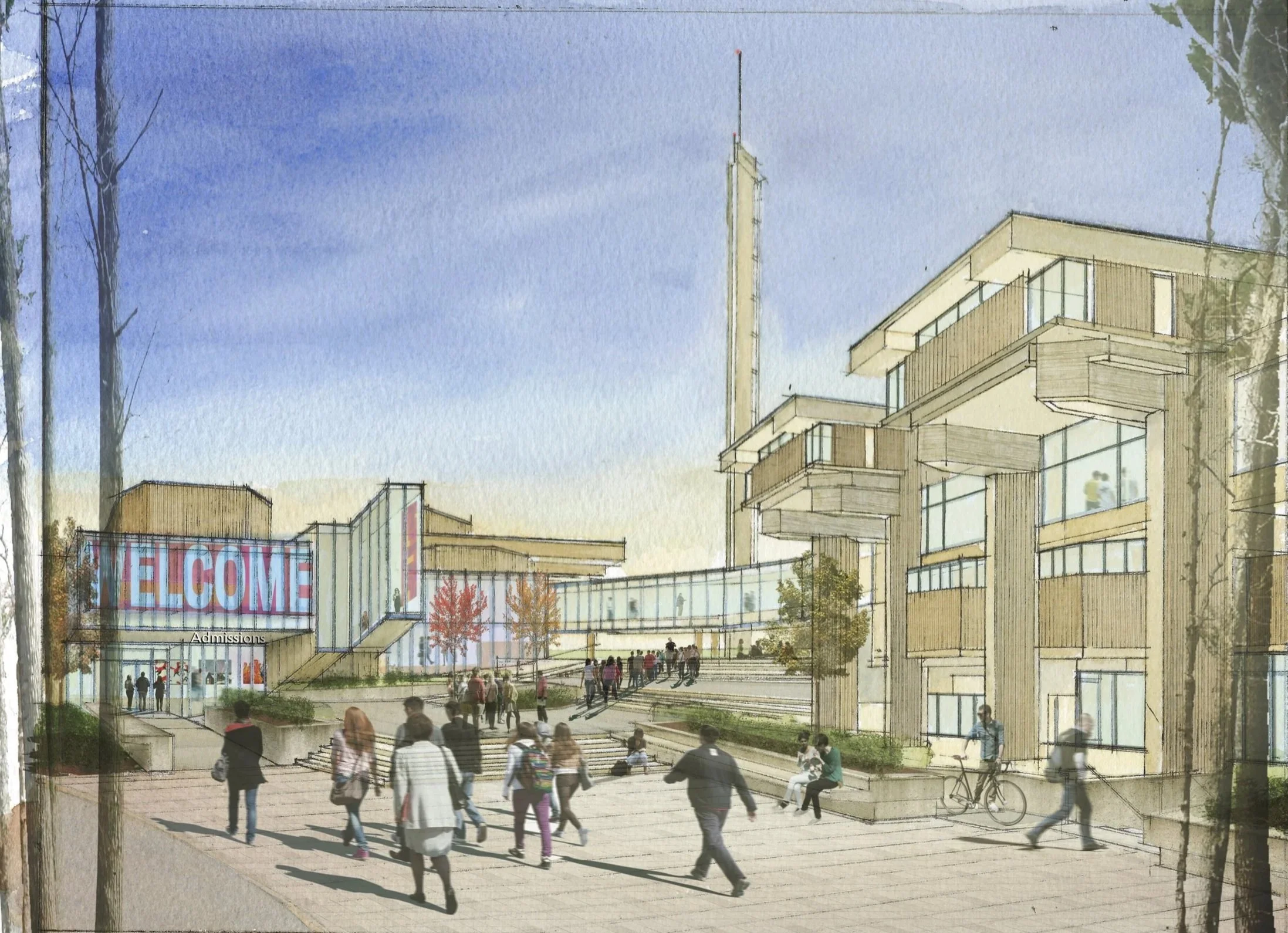
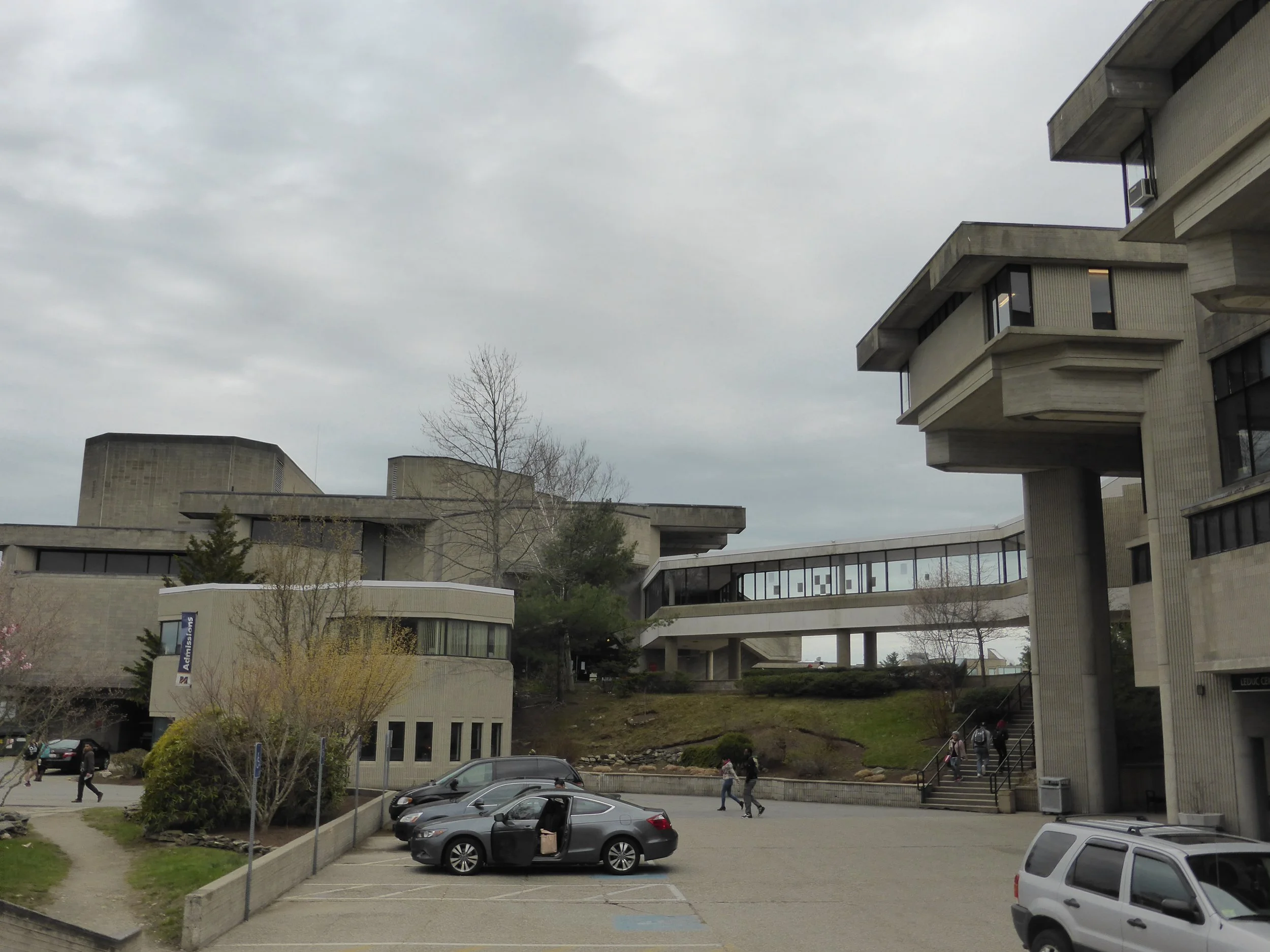
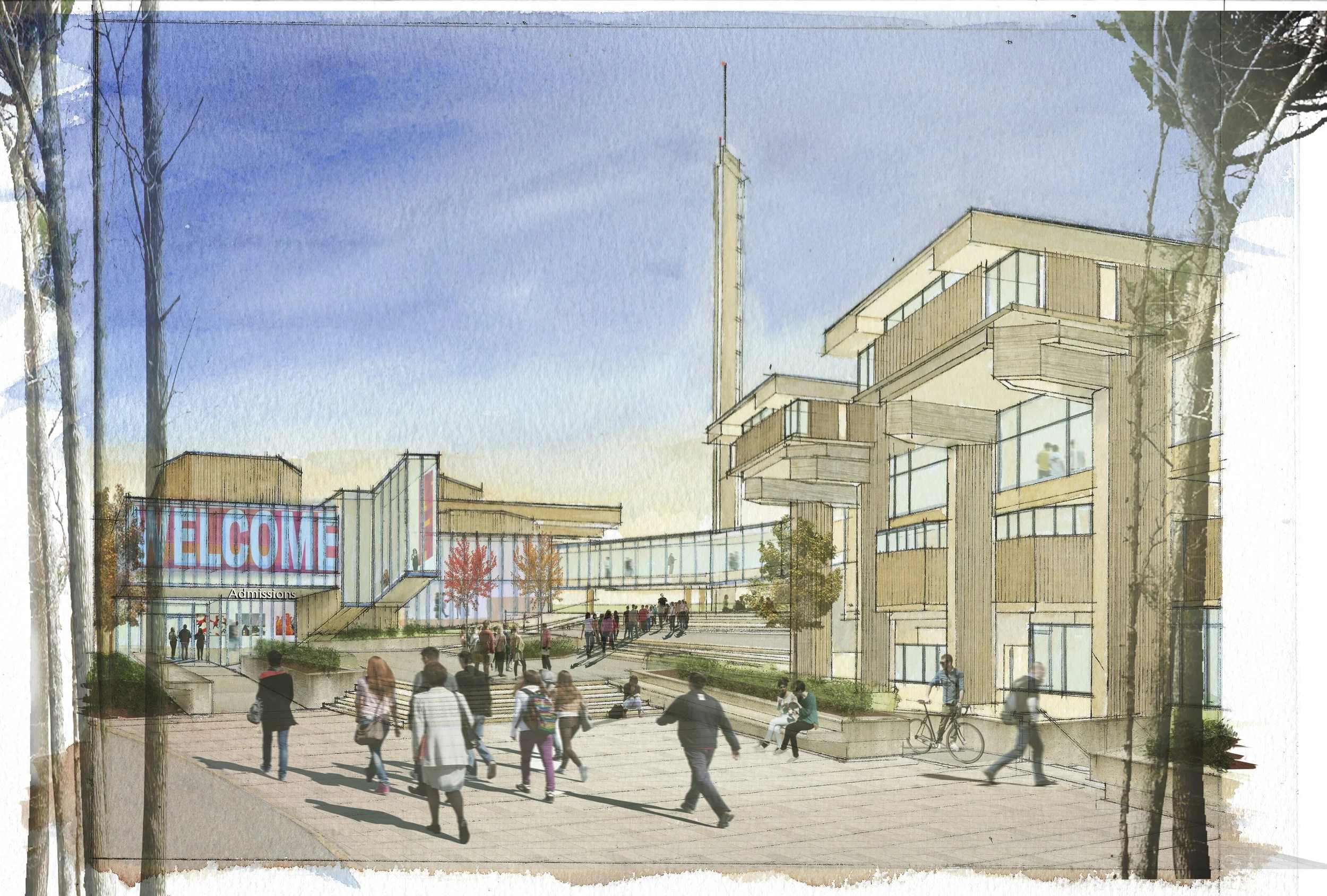
The functions allocated to this part of campus include a new Welcome Center that includes a lobby area for the Auditorium, and an Administration Building. The Arrival Hub will be defined by a cascading terrace that honors the Rudolph legacy as well as provides a graceful and accessible route to the Great Lawn. This space will be further defined by a higher level of landscape treatment.
As visitors exit the vehicle drop-off area, they will experience sweeping views of the Great Lawn, the Campanile, and the library beyond. To meet accessibility goals, a series of compliant ramps radiating out into the Great Lawn will lead to the rest of the campus without having to navigate the existing stairs. This new entry sequence will provide an informative referential view that could help visitors and prospective students orient themselves within the campus.
honoring paul rudolph
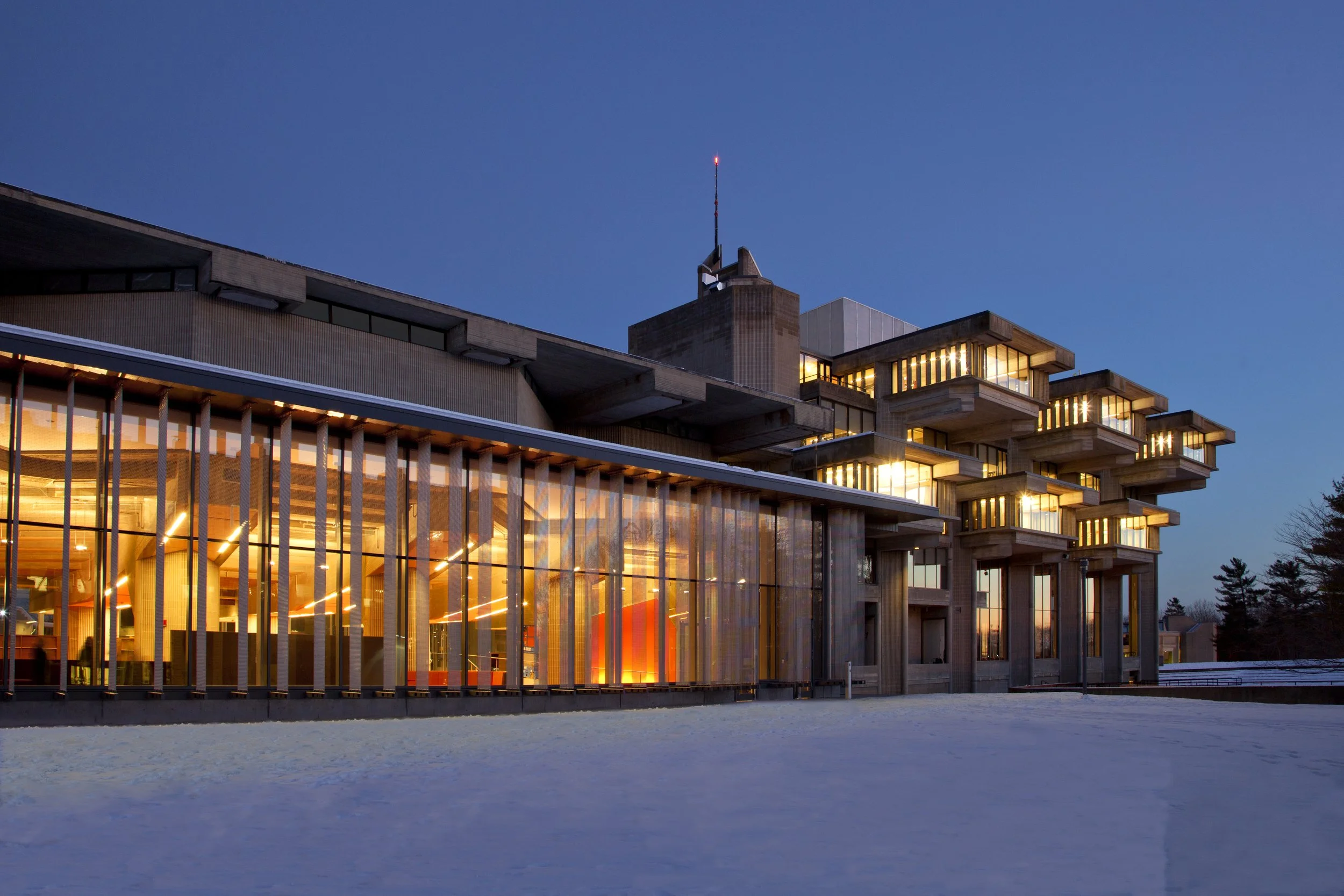
Paul Rudolph’s unique vision for the university unifies the campus but needs adaptation. The renovation of the Claire T. Carney Library demonstrated that Rudolph's architectural legacy can be reinterpreted sensitively, thereby increasing transparency, adding collaborative spaces, and improving the educational environment. The plan addresses specific recommendations for improvements to the atrium, expansion of the first-floor classrooms, and the creation of more casual meeting spaces, improved walkways, and gathering areas. While these recommendations address the existing building, the plan proposes creating a second tier of quads and courtyards that allow the academic facilities to expand, meet needed adjacencies, and extend the ideals of the Rudolph planning principles.
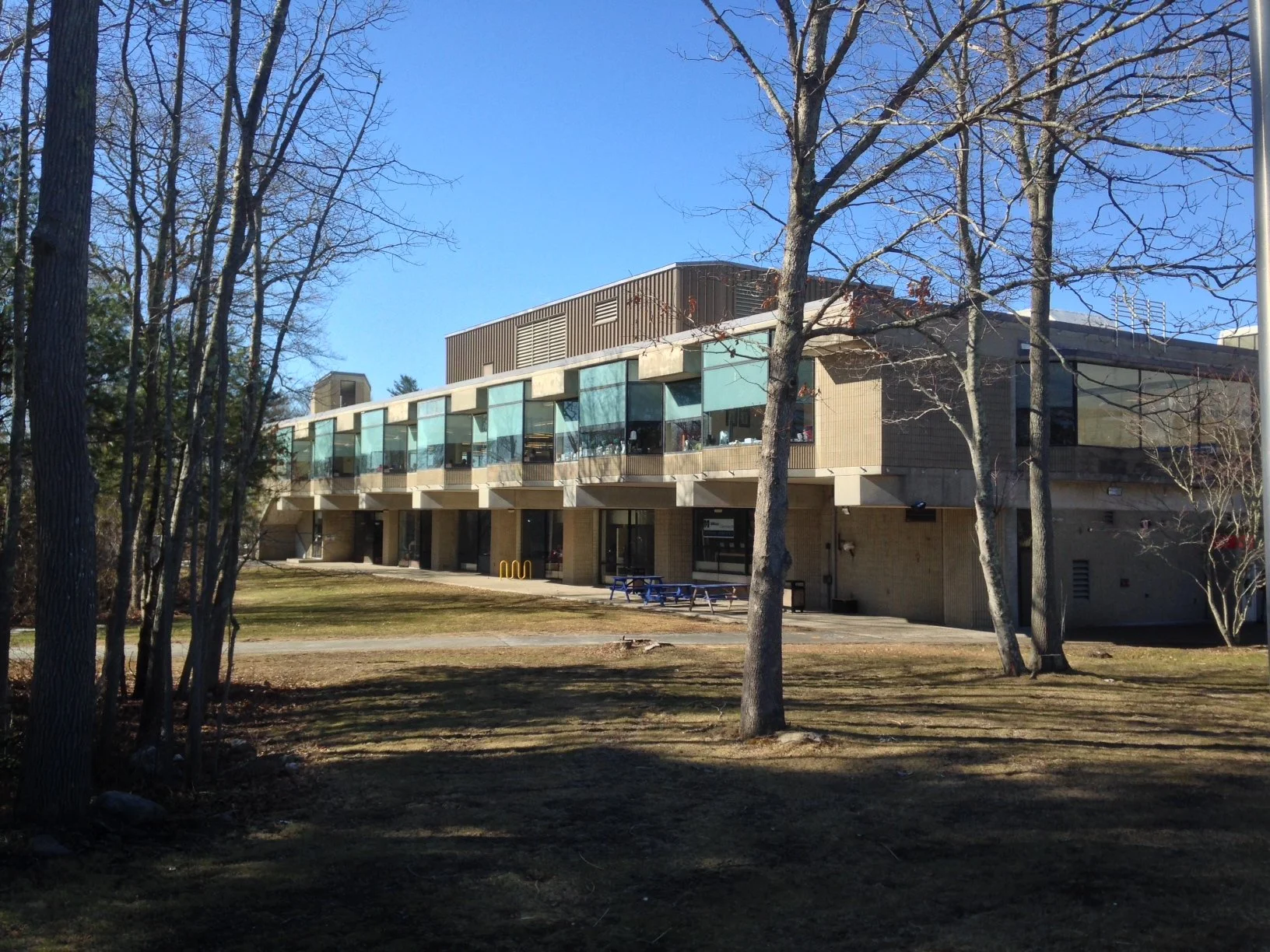
existing conditions